
Metal shops do not have one dust problem. CNC chips, welding fume, grinding fines, abrasive media, oil mist, and combustible metal dust each need a different capture strategy before anyone picks a vacuum, collector, filter, or discharge method.

Metal fabrication dust control starts with a practical question: what is actually on the floor, in the air, and inside the machine? A CNC cell with wet chips does not behave like a stainless welding bay, and a grinding bench that creates fine aluminum dust should not be treated like ordinary steel housekeeping.
TVD Industries designs industrial vacuum and dust-control recommendations around the process first. DuroVac may be the right platform for heavy housekeeping, chip recovery, central piping, and vac-truck replacement in steel and fabrication plants. Depureco becomes important when conductive combustible metal dust, inerting, ATEX, ACD, or other specialty equipment paths are on the table. The answer depends on the material stream, the hazard review, the pickup distance, filtration, discharge, grounding, and how operators actually clean.

Separate Chips, Fume, and Fines Before Choosing Equipment
The word “metal dust” hides too much. Cleanup quality improves when the shop separates the stream by process, particle size, temperature, oil content, and combustible-dust behavior.
Machine tools can create wet chips, dry fines, tramp oil, and floor debris around conveyors, sumps, chip bins, and tool-change areas. Pickup performance depends on hose diameter, pipe path, collection method, and whether the material bridges or clogs.
Welding fume is an airborne exposure problem, not just a floor housekeeping problem. Stainless and other alloys can involve regulated constituents such as hexavalent chromium, so capture near the arc matters.
Grinding creates fine dust, sparks, and abrasive debris. Steel, stainless, aluminum, magnesium, titanium, and mixed metals should not be grouped together until the dust hazard and ignition picture is understood.
The first design rule is not “buy a bigger vacuum.” The first design rule is to stop mixing unlike streams. Chips, fumes, hot work, combustible fines, oily debris, and abrasive dust may require different capture points, filtration, containers, and cleaning procedures.
Where DuroVac Fits in a Metal Fabrication Plant
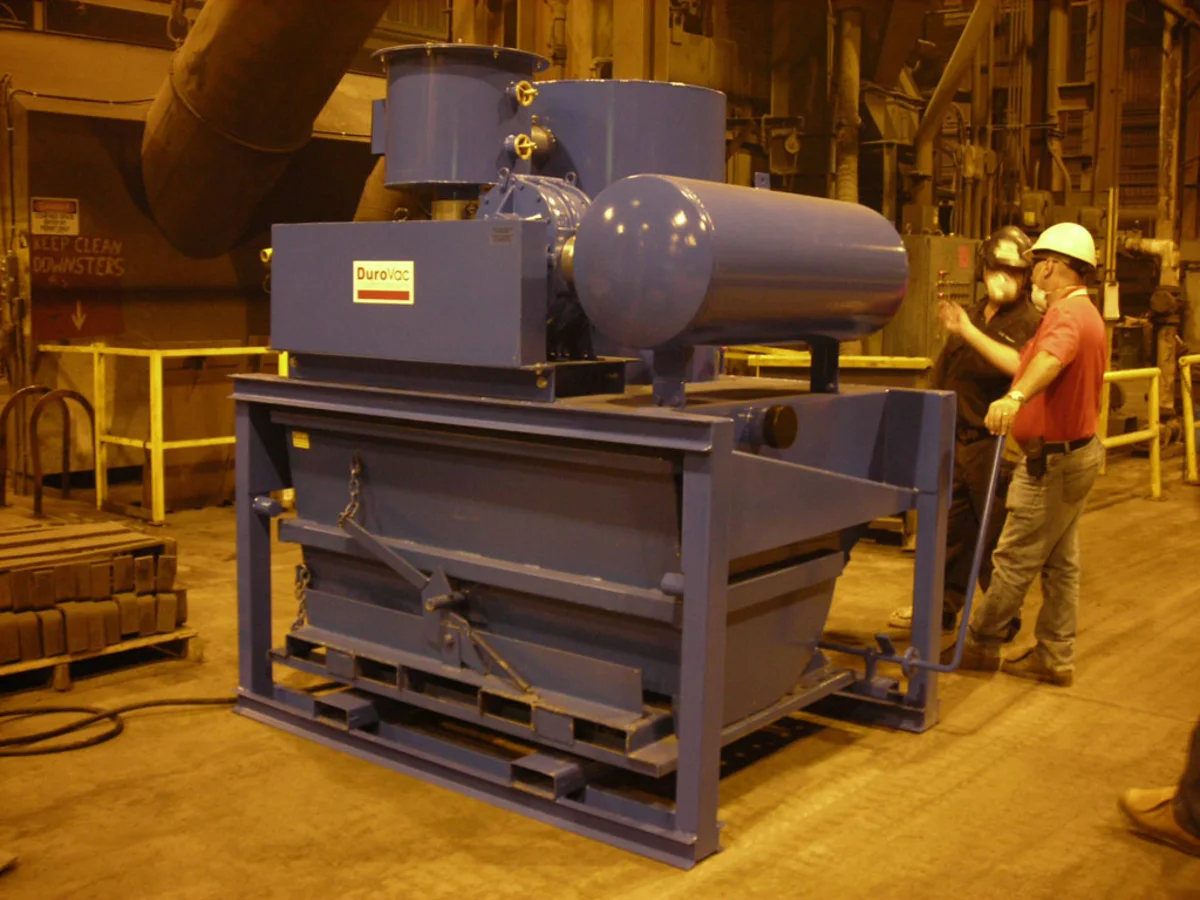
DuroVac is a strong fit when the plant needs rugged industrial vacuum performance for heavy housekeeping, chip recovery, floor cleanup, central piping, and recurring contractor cleanup replacement. DuroVac’s primary-metals material highlights metal dust vacuum systems for heavy industrial facilities and frames the problem around NFPA/OSHA awareness, production uptime, and reducing outsourced vacuum truck reliance.

For steel, stainless, brass, copper, and general fabrication debris, TVD can evaluate DuroVac DVR, DVP, PL, EL, or central systems based on distance, pickup points, user count, separator needs, discharge path, and maintenance burden.
The system still has to be sized to real material behavior. A machine that moves dry floor fines may not move oily chips the same way, and a setup that works at one inlet may fail at the farthest hose station if the pipe path and pressure drop are ignored.
Heavy housekeeping, CNC chip recovery, iron or steel dust cleanup, central vacuum layouts, foundry support, and plants replacing recurring outside cleanup.
Material weight, moisture or oil, hose length, branch count, separator placement, filter load, discharge routine, grounding, and maintenance access.
Depureco for Conductive Combustible Metal Dust
Fine aluminum, magnesium, titanium, zirconium, and mixed conductive metal dust require a specialty equipment review before standard housekeeping vacuums are considered. Depureco’s BL AM and BL 45 DEX INERT platforms are designed for conductive metal dust collection, ATEX Zone 22 classified environments, and inerting-liquid collection inside the unit.

Dust size, density, conductivity, heat, moisture, and mixing determine whether the solution should follow a standard industrial-vacuum path or a specialty combustible-metal path.

For conductive combustible metal dust, TVD can evaluate Depureco inerting and classified-area options alongside the dust hazard analysis, AHJ, insurer, and plant safety requirements.
ATEX or ACD markings do not replace engineering review. U.S. plants still need the material, area classification, NFPA obligations, bonding and grounding, collection method, and authority-having-jurisdiction expectations reviewed before equipment is selected.
Welding Fume Is a Source-Capture Problem
Housekeeping vacuums can help remove settled debris, but welding fume should be controlled as close to the arc as practical. OSHA’s hexavalent chromium standard sets a permissible exposure limit of 5 micrograms per cubic meter as an 8-hour time-weighted average, which is one reason stainless welding and certain alloy work cannot be reduced to “clean the floor more often.”
Compliance Language Should Stay Specific
Metal fabrication posts can drift into vague compliance claims fast. A better recommendation names the material, the process, the known standard family, and the review still required. Combustible dust considerations now live under NFPA 660, while combustible metal work may also point to NFPA 484 and site-specific authority review. OSHA exposure standards can apply when the process creates airborne hazards such as welding fume or regulated metal constituents.
TVD’s recommendation should not promise a universal fine, a generic business return, or a single brand answer. It should explain why the selected system fits the material stream and what assumptions need to be confirmed on the plant floor.
Frequently Asked Questions
Sometimes one central layout can support multiple housekeeping points, but the streams should be reviewed separately first. Welding fume, hot grinding dust, oily chips, and combustible metal fines may need different capture and filtration paths.
No. The answer depends on the metal, particle size, dust quantity, dispersion potential, ignition sources, and area classification. Fine aluminum or titanium dust is a different problem than ordinary steel chips.
Depureco should be evaluated when conductive combustible metal dust, inerting, ATEX, ACD, or specialty hazardous-dust collection becomes part of the review.
DuroVac is often the stronger starting point for rugged industrial housekeeping, chip recovery, iron or steel dust cleanup, central systems, and plants replacing recurring outside cleanup services.
Need a Metal Fabrication Dust-Control Plan That Matches the Actual Floor?
TVD Industries can walk the shop, separate the material streams, and recommend the right DuroVac, Depureco, source-capture, or central-system path before the plant spends money on the wrong equipment.
Book a Metal Fab Dust Walk