Capture spills before they spread.
Vacuum drops, hose reels, and floor inlets help operators clean around production lines without stirring dust into the air.
TVD designs vacuum, recovery, and dust collection systems around the realities of ingredient dust, washdown areas, allergen separation, and short cleaning windows.
Food facilities cannot rely on brooms or compressed air when flour, sugar, spice, grain, packaging debris, oils, and syrups create contamination risk, slip hazards, and combustible dust exposure.
Vacuum drops, hose reels, and floor inlets help operators clean around production lines without stirring dust into the air.
Systems can support cleaner walking-working surfaces and reduce airborne ingredient dust when placed near the actual problem areas.
Properly sized separators, filters, and piping help crews clean between runs or during production instead of waiting for long shutdown windows.
TVD maps vacuum layout, material handling, filtration, and operator access around the facility’s real dust sources and cleanup routes.
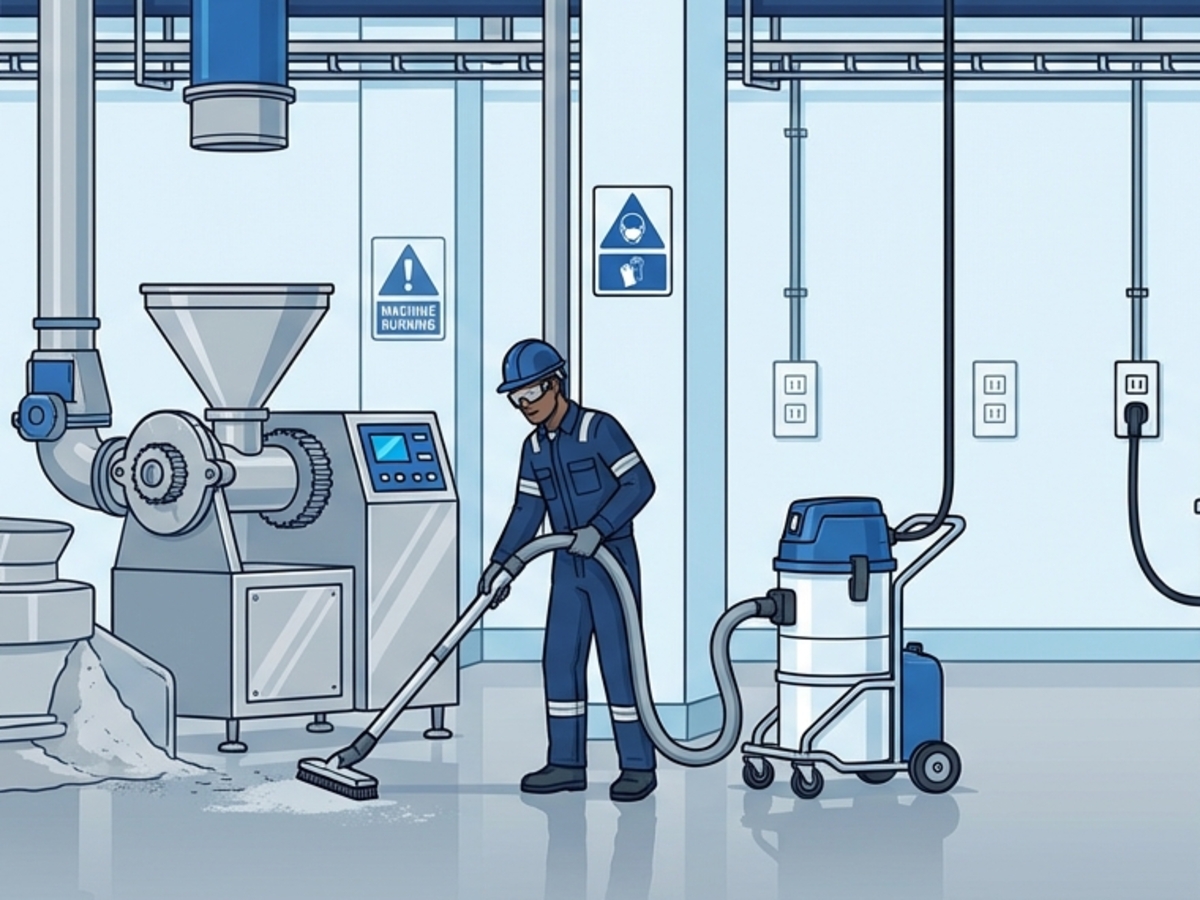
Floor inlets and hose reels near mixers help crews respond quickly to powder leaks, overloads, and ingredient spills.
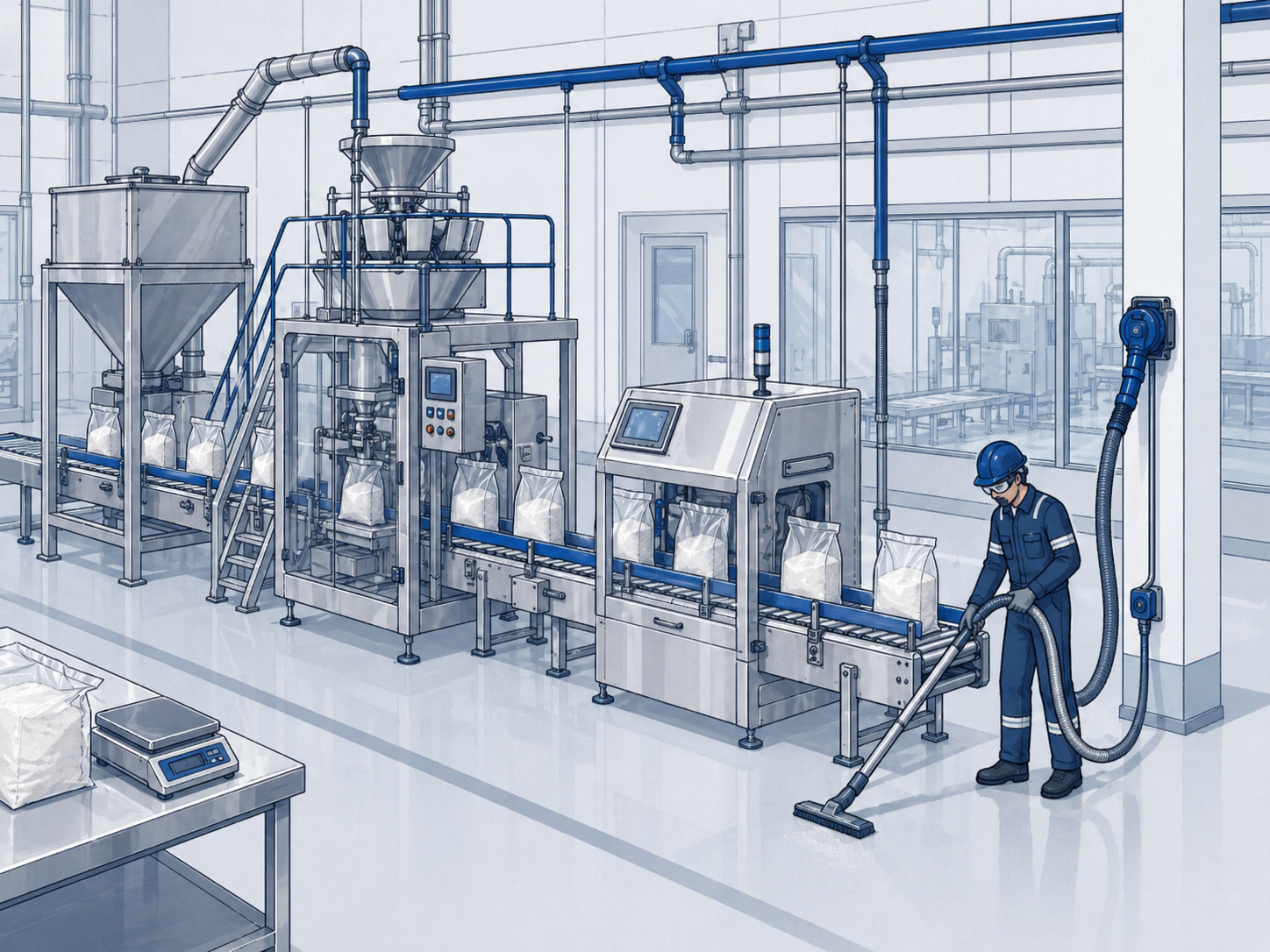
Operator drops placed near bagging, filling, and sealing stations make cleanup more repeatable.
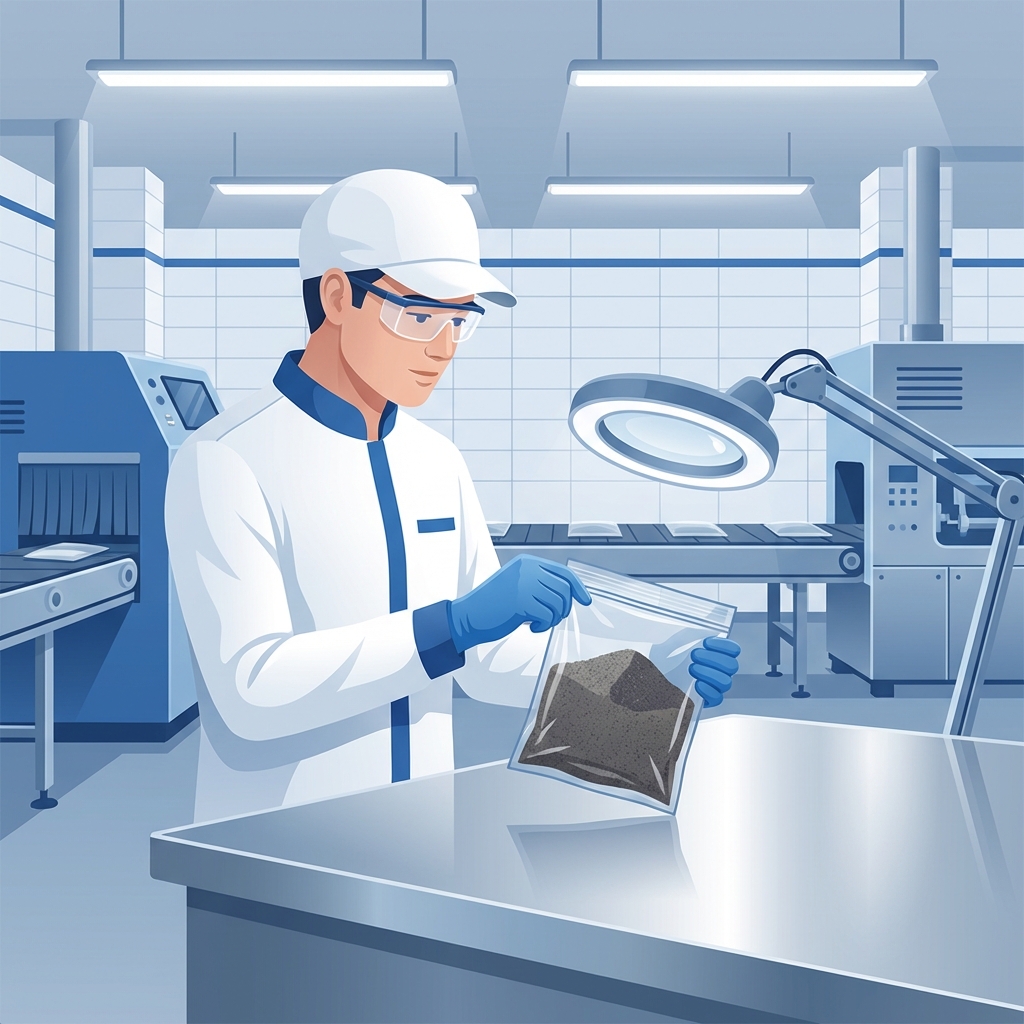
Food-grade containment and separators can support reclaim workflows when your sanitation plan allows product recovery.
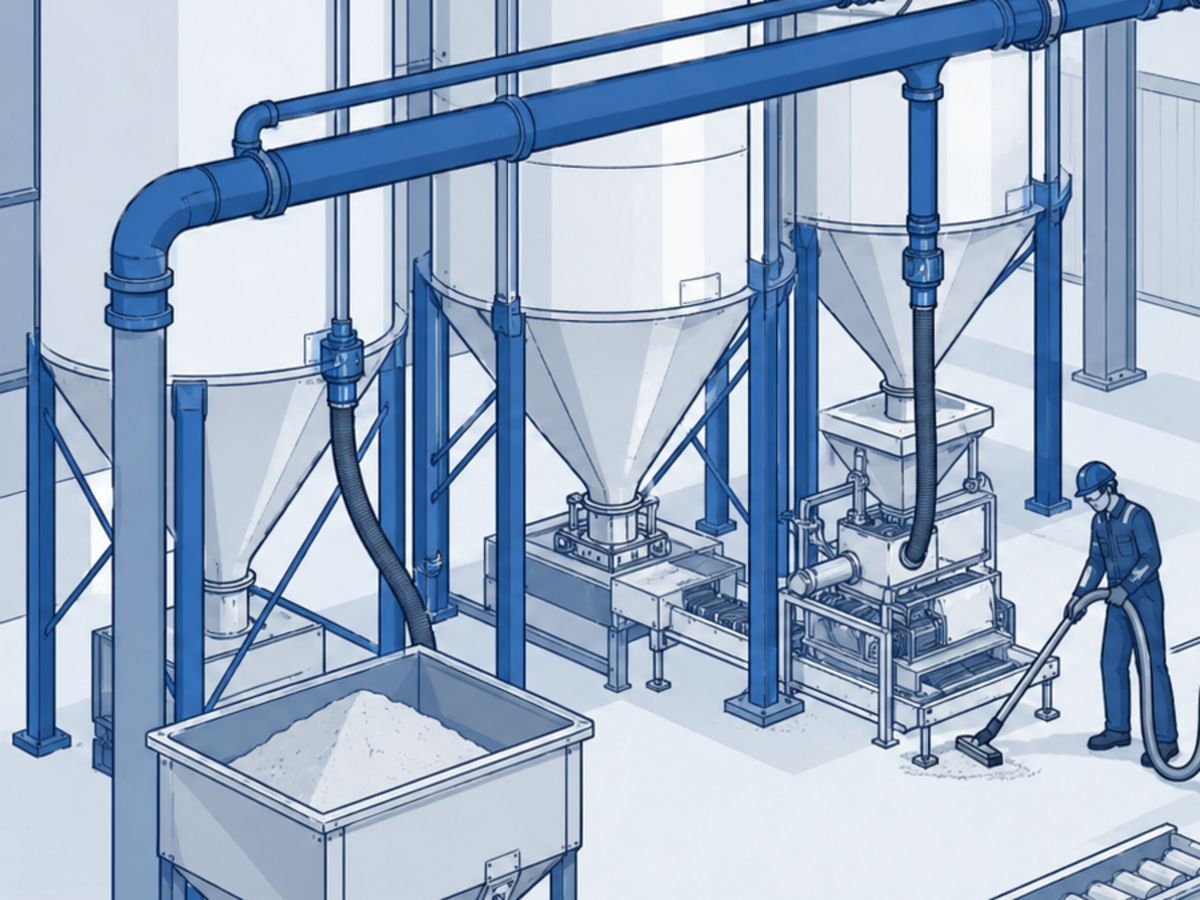
Vacuum points around transfer areas help prevent ingredient buildup around silos, conveyors, and bulk handling zones.
Food plants often need more than one approach. TVD recommends by material, operator count, run length, cleanup frequency, and compliance objectives.
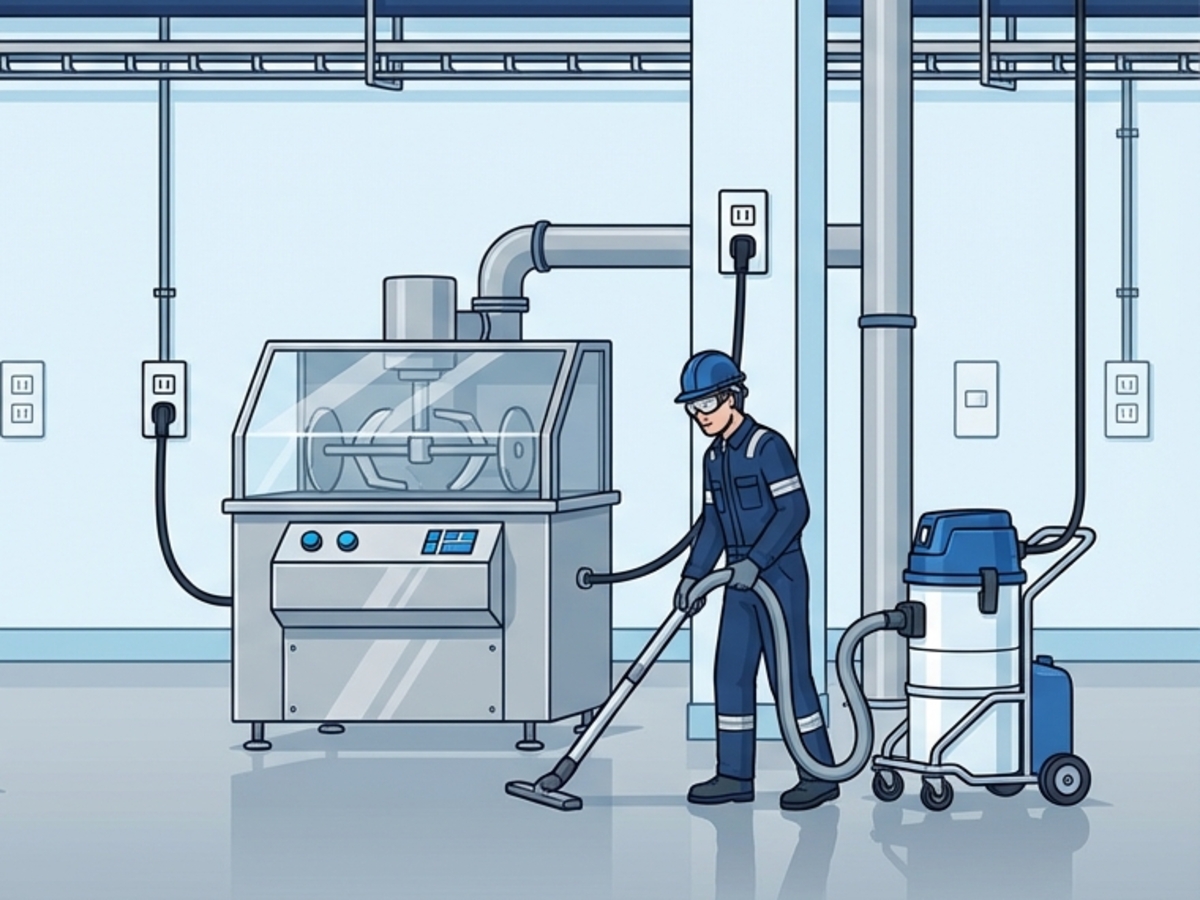
Cart-mounted units for spot cleanup, audit walkthroughs, retrofit installs, and single-operator workflows. Common fits include DuroVac DVR or DVP.
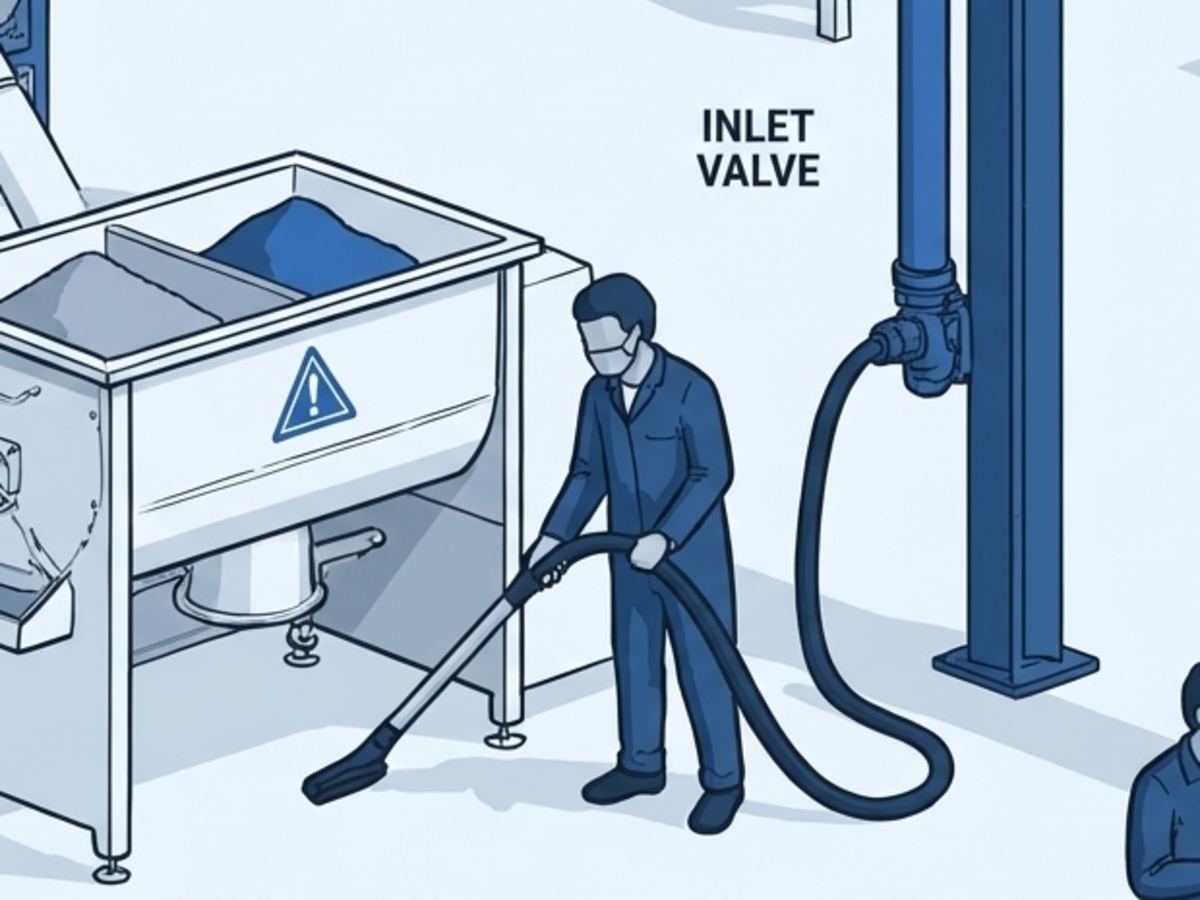
Permanent piping with operator drops at mixing, packaging, sanitation, and ingredient zones. Common fits include DuroVac CORE CENTRAL or Eurovac.
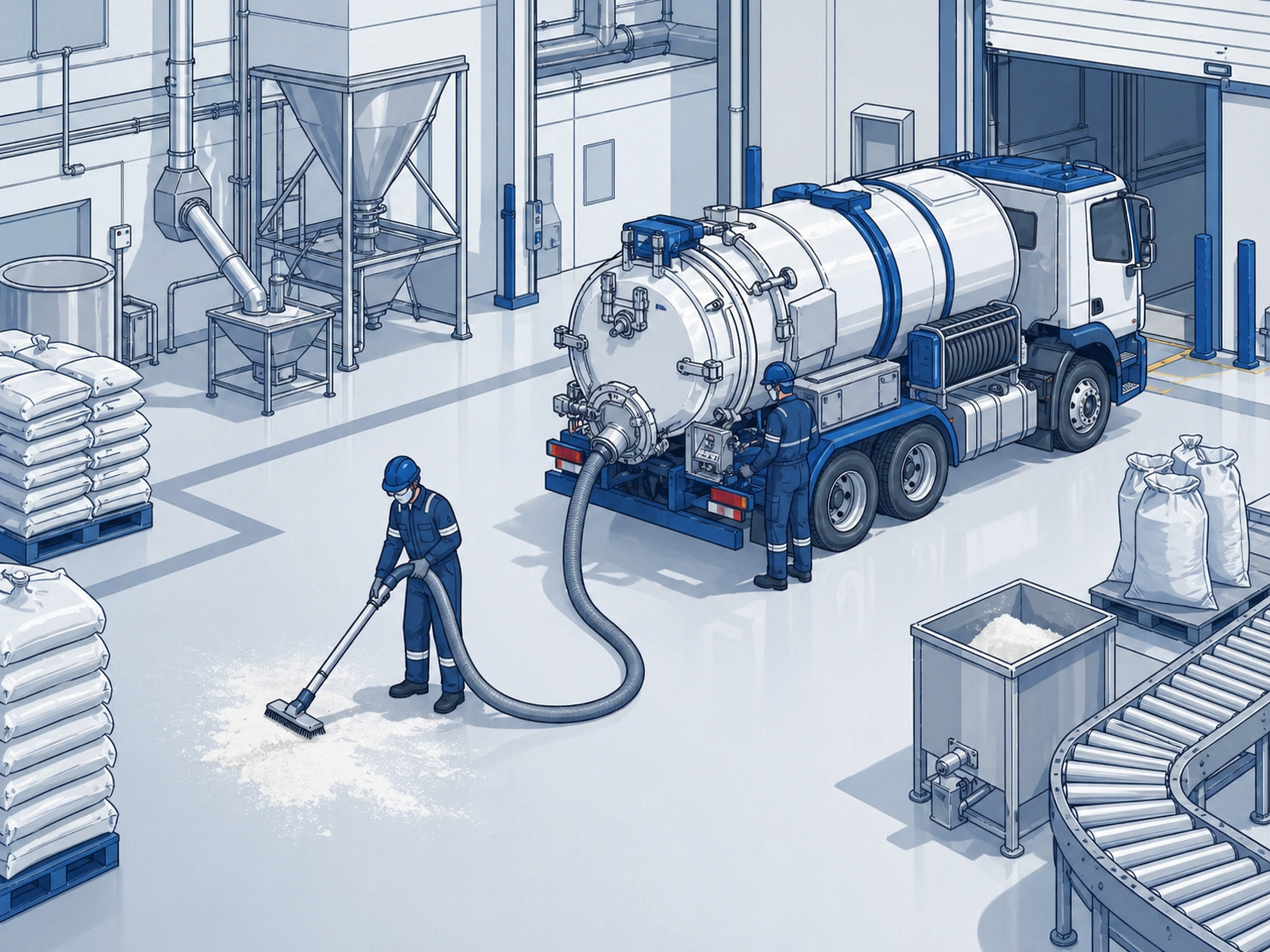
For bag spills, silo cleanouts, ingredient recovery, and displacement of recurring outside vac truck service. Common fits include DuroVac PowerLift PL Series.
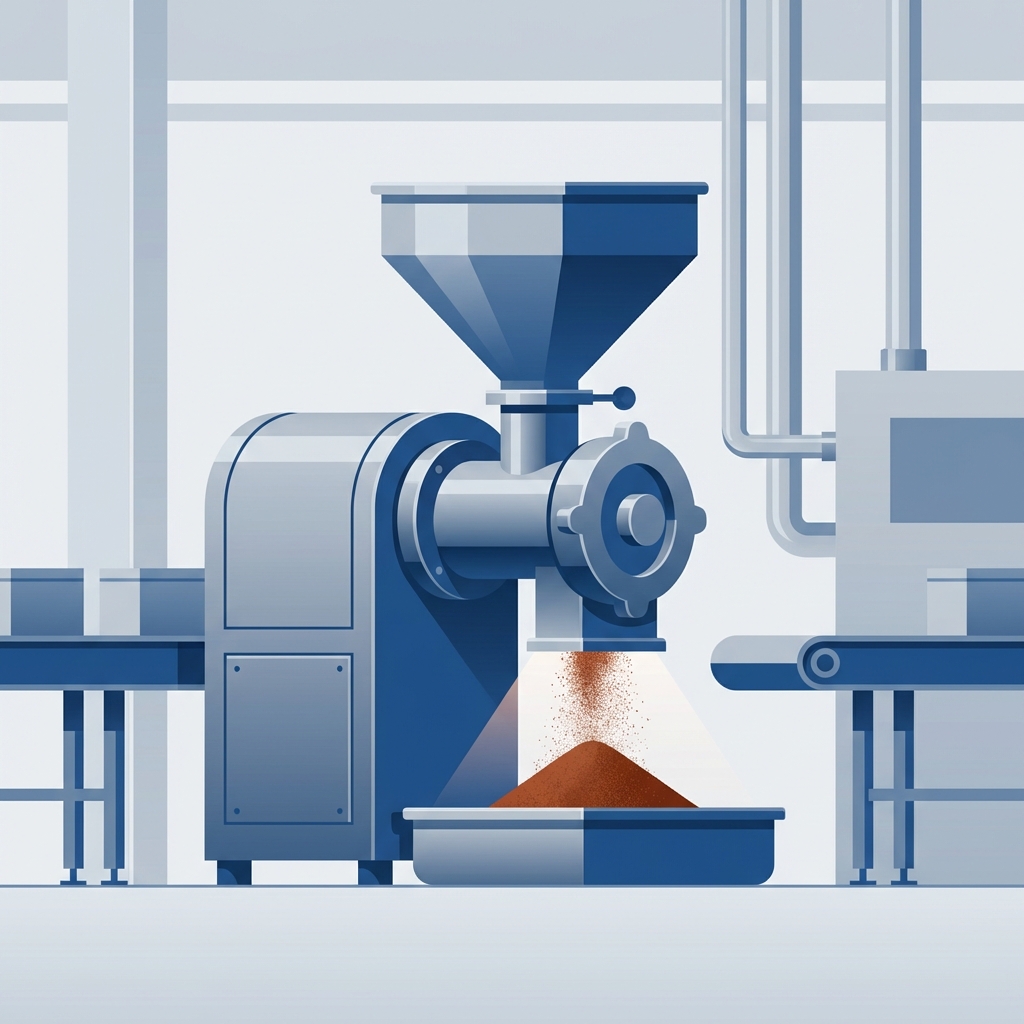
Cartridge or baghouse capture at mixers, sifters, and packaging machines. Supports NFPA combustible dust mitigation and indoor air quality objectives.
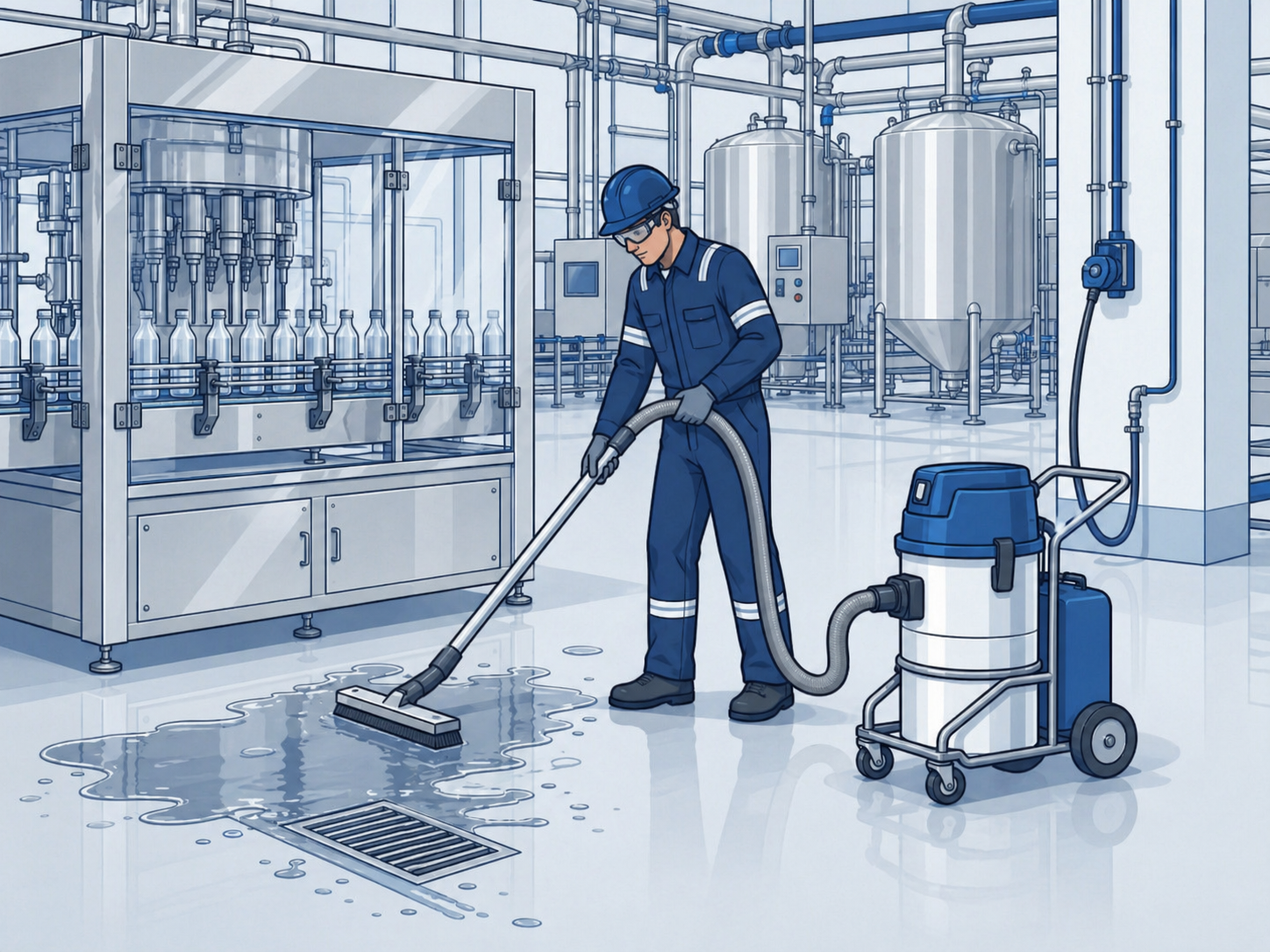
For oil, syrup, slurry, and washdown zones. Integrated separators, food-grade containment, and stainless contact surfaces pair with central or portable systems.
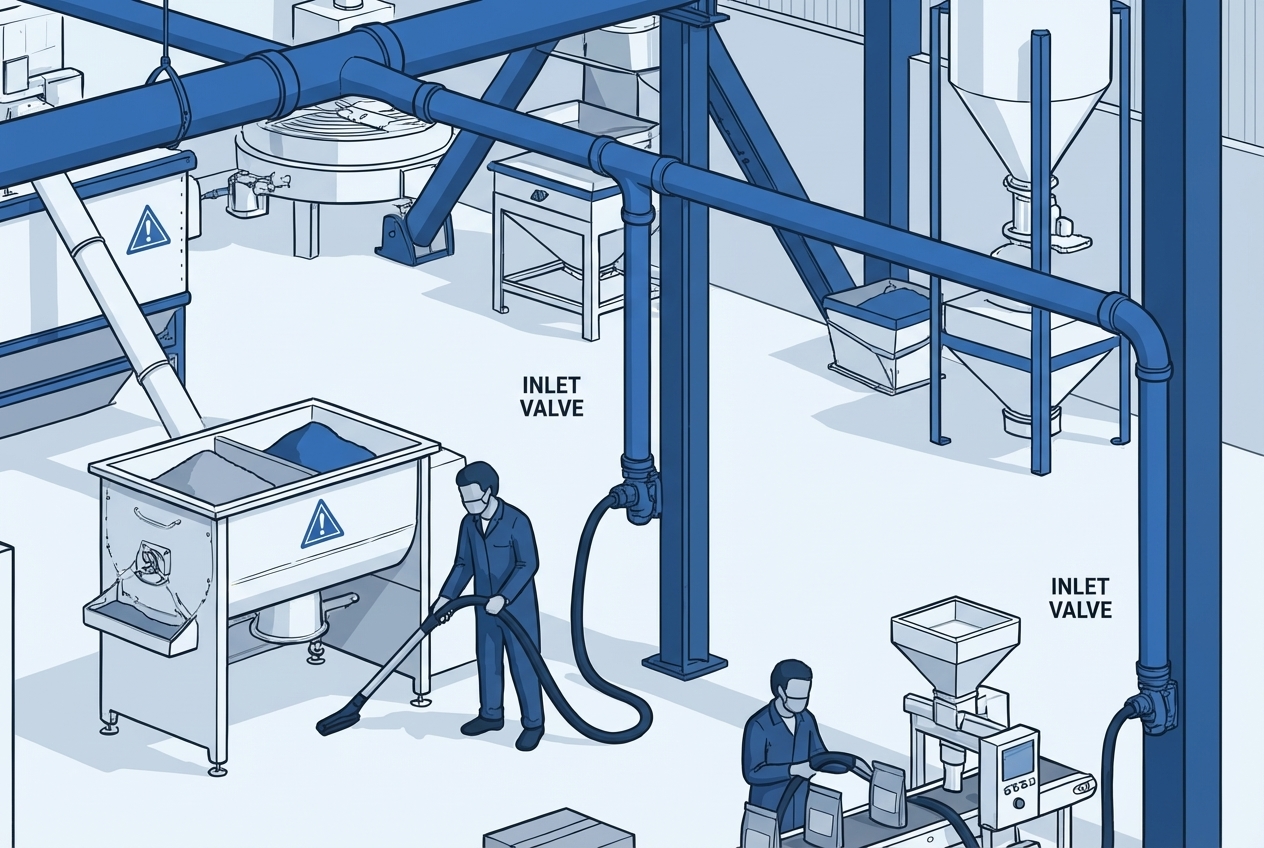
The right system depends on the ingredient, facility layout, operator behavior, washdown routines, filtration load, and whether the system must support separation by allergen or sanitation zone.
We plan around NFPA 652 and 654 dust hazard objectives, OSHA walking-working surface concerns, and sanitation or allergen control needs under FSMA.
Stainless contact surfaces, smooth-bore hoses, HEPA filtration, grounding, separators, and washable tooling can be selected for the zones that require them.
TVD helps with filter schedules, operator training, pickup-point changes, and service windows that respect production demands.
TVD does not promise blanket compliance. We design vacuum, recovery, and dust collection systems to support the compliance objectives your facility, insurer, and safety team are already managing.
These answers keep the page focused on practical fit, audit readiness, sanitation, and cleanup operations.
They can support compliance objectives when designed around the facility’s dust hazards, walking-working surfaces, filtration needs, grounding, and source-capture points. TVD can coordinate with your safety team, insurer, or auditor during design.
Sometimes. If your sanitation plan allows it, TVD can design food-grade collection, stainless contact surfaces, and separation workflows that help keep recoverable product apart from waste.
Components can be specified for stainless construction, washable tooling, smooth-bore hoses, and separator layouts that are easier to clean and inspect.
It depends on your material, cleanup frequency, number of operators, pipe runs, allergen zones, and whether the dust is generated at a predictable machine or across a wide area. TVD sizes the recommendation by fit.
For some plants, yes. High-volume recovery systems can handle bag spills, silo cleanouts, and recurring bulk material cleanup while reducing dependence on outside truck scheduling.
Bring TVD into the facility early to review dust sources, sanitation zones, collection points, recovery goals, and maintenance needs before the next audit, expansion, or equipment change.