Stop debris from traveling.
Vacuum drops, hose reels, and portable units help crews capture material near the machine before it spreads into aisles and adjacent work cells.
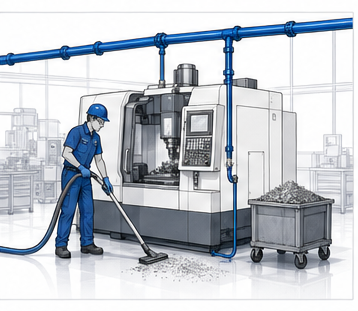
TVD designs portable, central, and high-volume vacuum systems around real production routes, material type, operator count, discharge method, and maintenance access.
Manufacturing plants lose time when dust, scrap, chips, fines, powder, and packaging debris migrate away from the source and become a facility-wide cleanup problem.
Vacuum drops, hose reels, and portable units help crews capture material near the machine before it spreads into aisles and adjacent work cells.
Correct filtration, separators, and pickup tooling protect the vacuum package from avoidable loading and reduce nuisance downtime.
A system matched to the plant layout turns cleanup from a scramble into a predictable process operators can actually follow.
TVD maps the material source, operator path, air volume, pickup tooling, and collection method before recommending a system type.
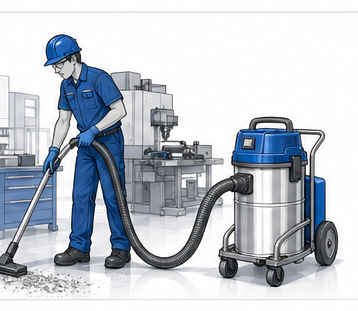
Cart-mounted systems support cells, lines, and maintenance crews that need flexible recovery.
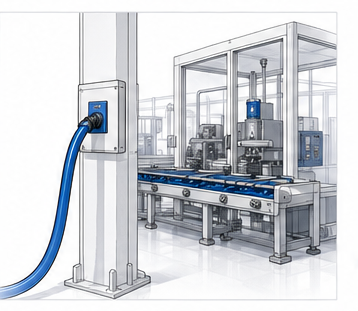
Permanent piping and inlet valves keep hose access close to production without parking equipment in the way.
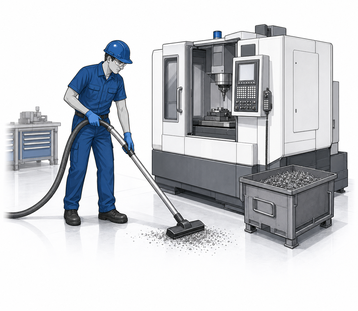
Tools and hose packages help crews clean platforms, aisles, mezzanines, pits, and machine bases.
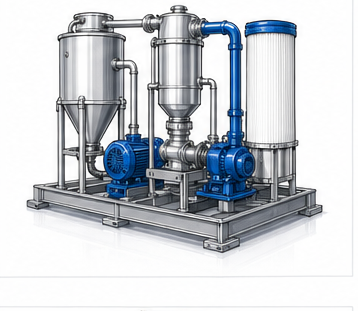
Central packages consolidate filtration, collection, and maintenance access away from production work.
A plant may need portable units, central vacuum, point-source capture, high-volume recovery, discharge-ready systems, or a hybrid design.
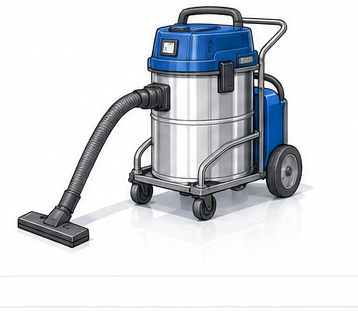
Line-side cleanup for powder, chips, scrap, dry material, and daily housekeeping.
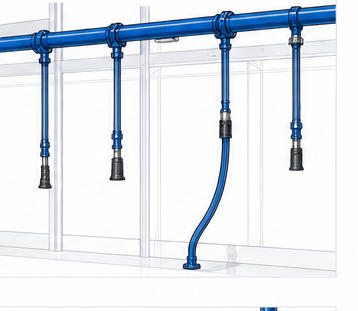
Permanent multi-drop systems for plants that need fixed access across production and maintenance zones.
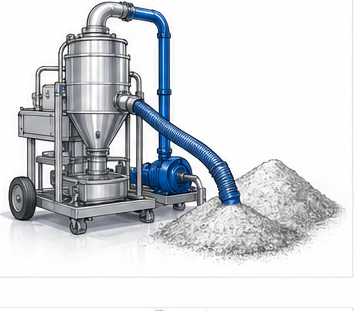
Large pile recovery, truck displacement opportunities, and heavier bulk cleanup.
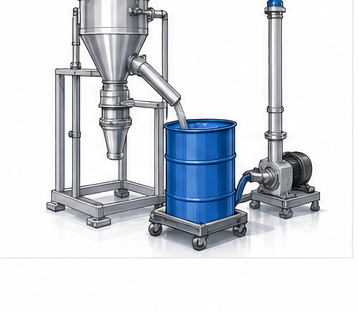
High-throughput dry material transfer with collection into drums, totes, or hoppers.
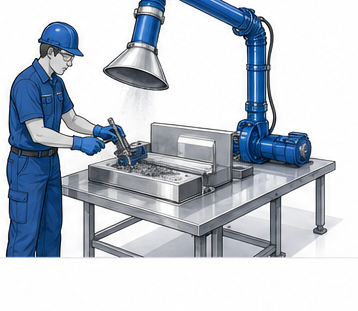
Hoods, ducting, and collectors at machines, transfer points, cutting stations, and other predictable dust sources.
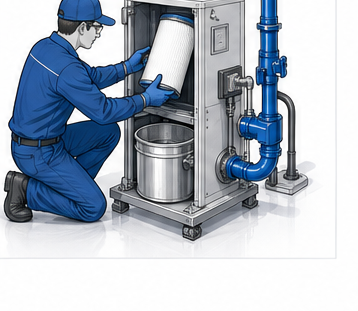
TVD starts with the plant layout, material profile, and cleanup behavior so the finished system is practical to use after installation day.
We review where material is created, where operators stand, where hoses can reach, and where collected material should go.
Airflow, vacuum level, pipe diameter, separator volume, filter loading, and duty cycle drive the recommendation.
TVD helps with training, filter schedules, accessory changes, and system modifications as production changes.
TVD does not promise blanket compliance. We design systems to support the housekeeping, filtration, service, and dust-control goals your team is already managing.
These answers keep the page focused on practical system fit and production-floor use.
It depends on operator count, cleanup frequency, plant size, pipe runs, and whether the same mess happens in repeatable places. TVD sizes the system by fit.
Often, yes. Tooling, hose, separators, and filtration need to match the material, especially where dust is fine, abrasive, oily, or combustible.
It can support housekeeping objectives when placed where operators can actually use it and when the collection package is maintained correctly.
Yes. TVD can design around existing equipment, utilities, mezzanines, production traffic, and maintenance access.
Bring TVD in to review dust sources, cleanup routes, material handling, filtration load, discharge method, and operator access before the next expansion, audit, or shutdown.