Remove debris before it migrates.
Dedicated vacuum access helps crews remove chips, dust, and fragments before they move into fixtures, bays, tooling, or assemblies.
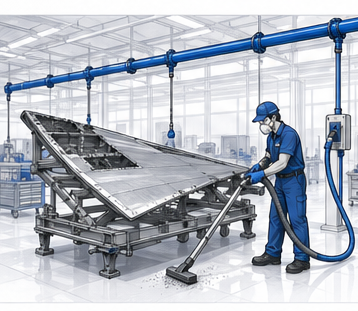
TVD helps aerospace teams plan central drops, point-source capture, portable high-efficiency cleanup, and grounded tooling around composite dust, metal fines, FOD exposure, and uptime-sensitive work areas.
Composite sanding, drilling, trimming, deburring, machining, and assembly can create fine particulate and FOD risks that ordinary shop vacuums are not built to manage.
Dedicated vacuum access helps crews remove chips, dust, and fragments before they move into fixtures, bays, tooling, or assemblies.
High-efficiency filtration, pre-separation, and point-source capture help reduce airborne and settled particulate.
Correct hose routing, drop placement, and collection location keep cleanup practical in congested production areas.
TVD plans vacuum access around where dust is created, how parts move, and where operators can clean without interfering with production.
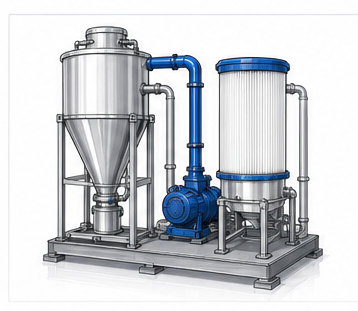
Pre-separation and HEPA options help manage fine dust before it overloads the system.
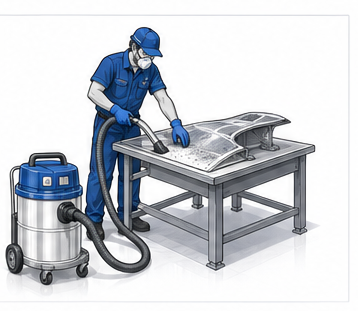
Portable industrial vacuums can support maintenance, spot cleanup, and temporary production zones.
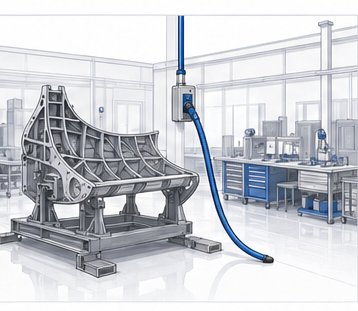
Permanent drops reduce mobile equipment traffic and make cleanup more repeatable across bays.
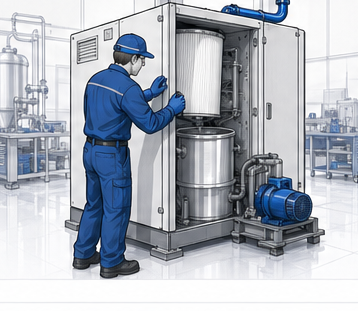
Remote collection packages keep filters, drums, and service points away from sensitive work areas.
Aerospace applications often need a mix of central vacuum drops, point-source capture, portable high-efficiency cleanup, and grounded accessories.
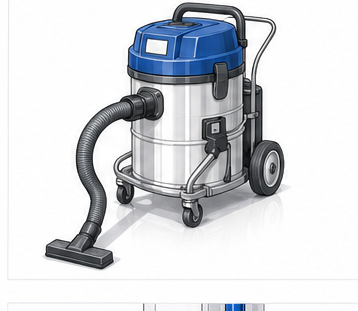
Spot cleanup for cells, maintenance teams, composite dust, and fine debris workflows.
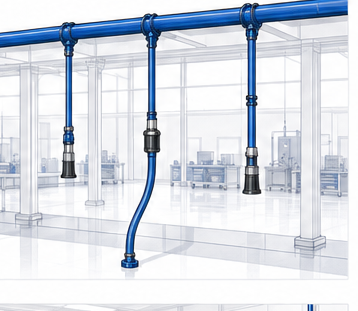
Fixed drops across bays, tooling areas, production routes, and support spaces.
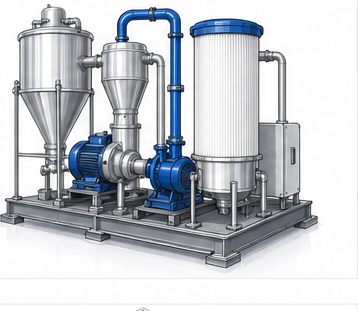
Layered filtration to protect the vacuum package and reduce downstream loading.
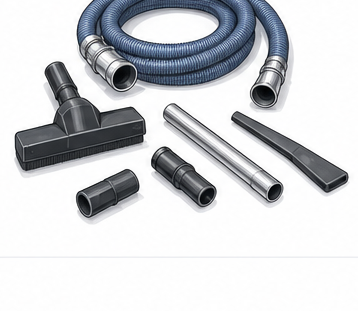
Application-specific hoses, tooling, and recovery packages for dust, chips, and dry material.
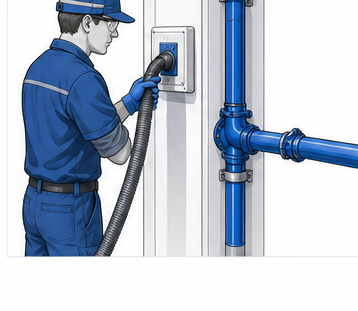
Survey, service, and redesign options for legacy systems that need better access or filtration.
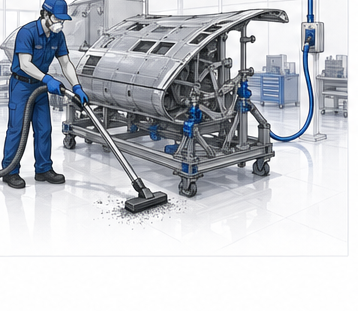
The right aerospace vacuum system depends on material, tool count, pickup distance, duty cycle, filtration target, and how the production team controls FOD.
We identify where dust and fragments originate, where they travel, and where operators need access.
Composite dust, metal fines, and general debris require different pre-separation, filter media, and maintenance planning.
Filter changes, drum handling, and separator access should happen without disrupting critical work zones.
TVD designs to support FOD, housekeeping, filtration, and dust-control objectives while your internal team, insurer, and compliance partners own final requirements.
These answers focus on FOD, filtration, and production uptime.
Yes, when pickup points and tooling are placed around the work cells where debris is created and handled as part of the team's normal cleanup process.
Many fine-dust applications benefit from HEPA or layered filtration, but the right answer depends on material, exposure controls, and maintenance expectations.
Yes. Retrofit planning can account for utilities, cranes, mezzanines, restricted access, and phased installation.
Often, but only if airflow, pipe runs, simultaneous users, and collection logistics are sized correctly.
Bring TVD in before the next facility change, audit, or process expansion to map material sources, pickup points, filtration, grounded accessories, and maintenance access.