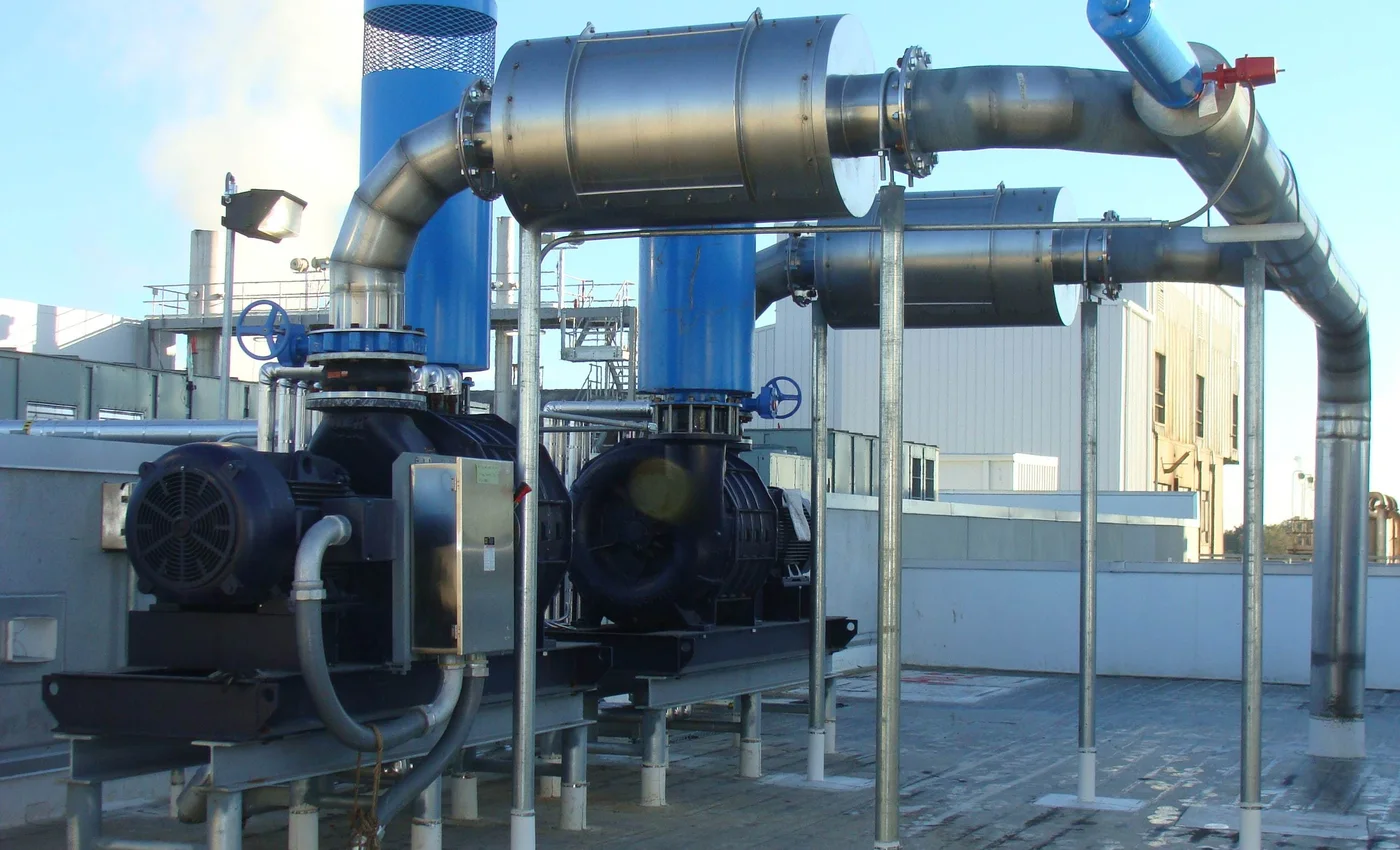

Food plants need vacuum systems that protect sanitation, control dust migration, and fit the actual material moving through the facility.
Food processing plants do not get clean by accident. Flour dust, sugar fines, spice powders, grain residue, pet food ingredients, allergens, and packaging debris can become sanitation, worker safety, production, and combustible-dust issues when cleanup is treated as a broom-and-shop-vac task.
TVD Industries designs industrial vacuum systems for food processing facilities that need repeatable housekeeping, safer dry cleanup, and a cleaner compliance story. The right system is not just a larger vacuum. It is a facility-specific design built around material behavior, pickup points, hose reach, filtration, discharge, grounding, and how operators actually clean during production.
Why Food Plant Vacuum Design Starts with Compliance
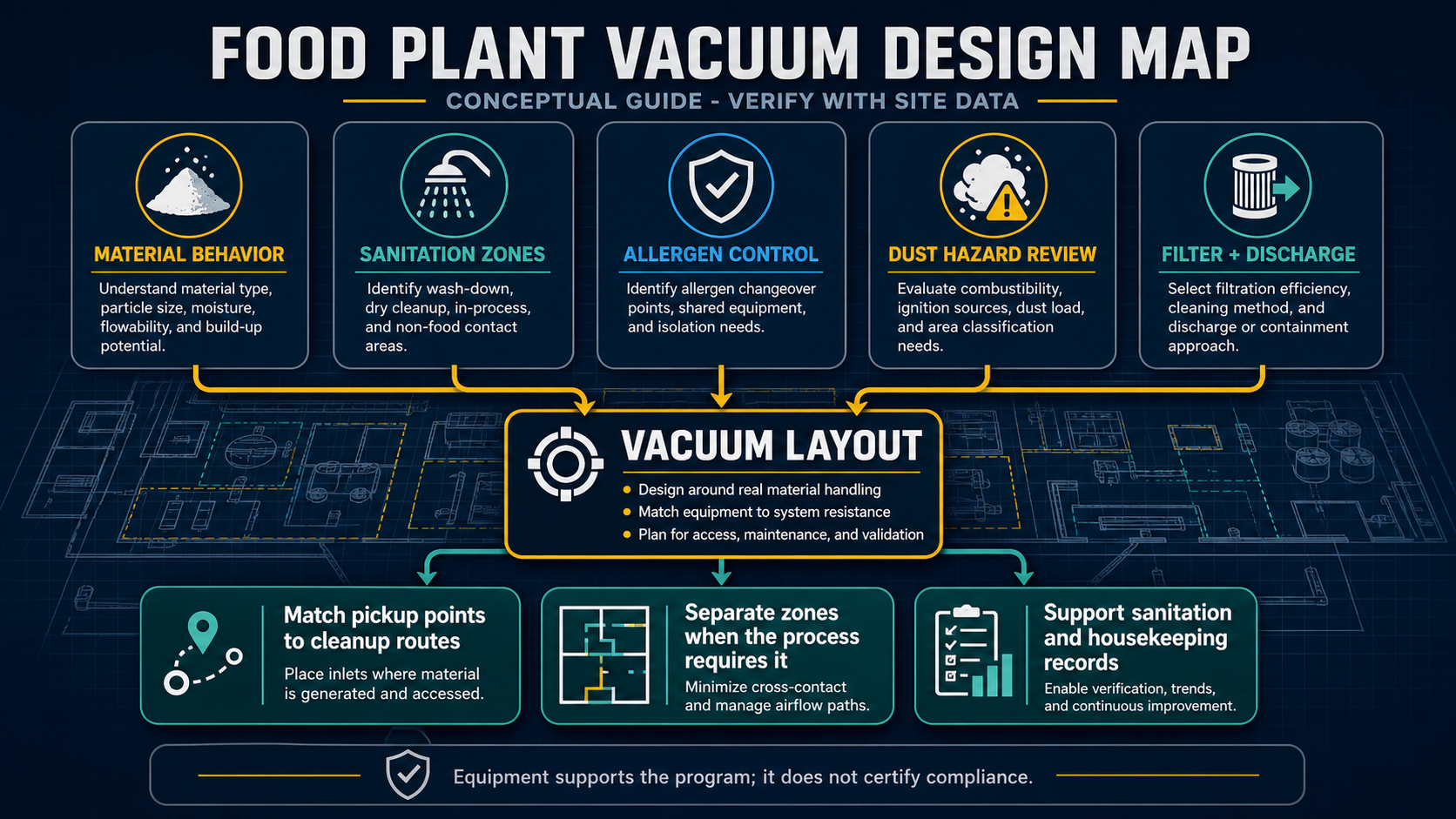
A compliance-first vacuum design starts with the material and the hazard review. Dry wheat flour, sugar, starch, cocoa, powdered milk, grain dust, seasoning blends, and pet food additives can each behave differently. The same plant may also have allergen changeovers, wet cleanup zones, packaging debris, and maintenance areas that should not be solved with one generic machine.
As of the 2025 combustible-dust standard cycle, NFPA 660 is the current consolidated combustible dust standard. Many plant documents and older audits still refer to NFPA 652 fundamentals or NFPA 61 for agricultural and food processing facilities, so TVD treats those references as legacy language while designing against the current hazard framework. OSHA also identifies multiple standards that can address combustible dust hazards, including walking-working surface housekeeping requirements under 29 CFR 1910.22 and related combustible-dust standards.
Compliance checkpoint: TVD does not replace a dust hazard analysis or your EHS consultant. The vacuum system should support the site program with proper pickup velocity, static control, filtration, separation, discharge, and documentation.
What Makes Food Processing Cleanup Hard
Food plants often have dust in exactly the places where cleanup is least convenient: bag dumps, mixers, screeners, conveyors, packaging lines, mezzanines, tote filling stations, rail or truck unloading areas, and maintenance rooms. If the nearest vacuum drop is too far away or the hose is miserable to use, operators will default to sweeping or compressed air, which can move fine material into ledges, cable trays, motors, and overhead structures.
That is why a good specification asks more than “How many horsepower?” TVD reviews the farthest inlet, hose length, number of simultaneous users, pickup tools, pipe routing, material volume, filter loading, and whether material should be recovered or discarded. The result is a vacuum system that fits the cleanup behavior, not just the building footprint.
Documented Food-Industry Installations
Bakery dust is not theoretical
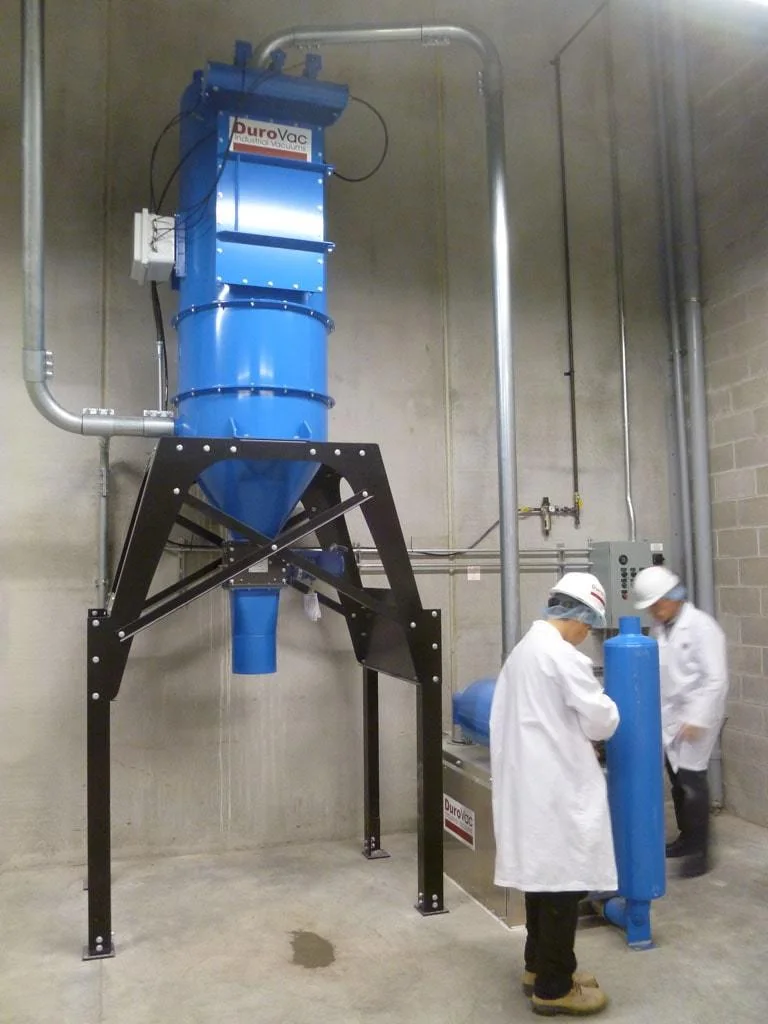
In DuroVac’s Bimbo Canada case study, the bakery needed central vacuum coverage for dry wheat flour in production and dough or bread crumb cleanup in packaging. DuroVac supplied two 25 hp central systems with dozens of pickup locations and up to five simultaneous users per system.
The important takeaway for food processors is design specificity: combustible material, non-combustible material, production zones, packaging zones, and maintenance access were handled as separate requirements.
Which DuroVac Platform Fits a Food Plant?
TVD is brand-agnostic in engineering posture, but DuroVac is usually the first platform to evaluate for food, spice, flour, grain, and pet food facilities because the line covers portable, semi-portable, central, hopper-based, and custom configurations. The best recommendation depends on dust load, collection method, simultaneous users, and whether the system is part of a larger combustible-dust program.
| Platform | Food Processing Fit | Design Trigger |
|---|---|---|
| DVR / DVP | Routine dry cleanup, multiple operators, production-area housekeeping, and semi-portable layouts. | Several pickup points, moderate piles, fine powders, or dense ingredients where producer selection matters. |
| PowerLift | High-volume ingredient spills, bin cleanouts, hopper discharge, and vac-truck replacement work. | Large piles, recurring outside contractor spend, forkliftable collection, or heavier bulk material. |
| Central Systems | Plant-wide coverage across production, packaging, mezzanines, unloading, and sanitation routes. | Many inlet stations, simultaneous users, fixed cleaning routes, and repeatable housekeeping documentation. |
| Custom Builds | Combustible-dust safeguards, classified areas, special discharge, and plant-specific integration. | Dust hazard analysis findings, explosion protection, outdoor receivers, or unusual material behavior. |
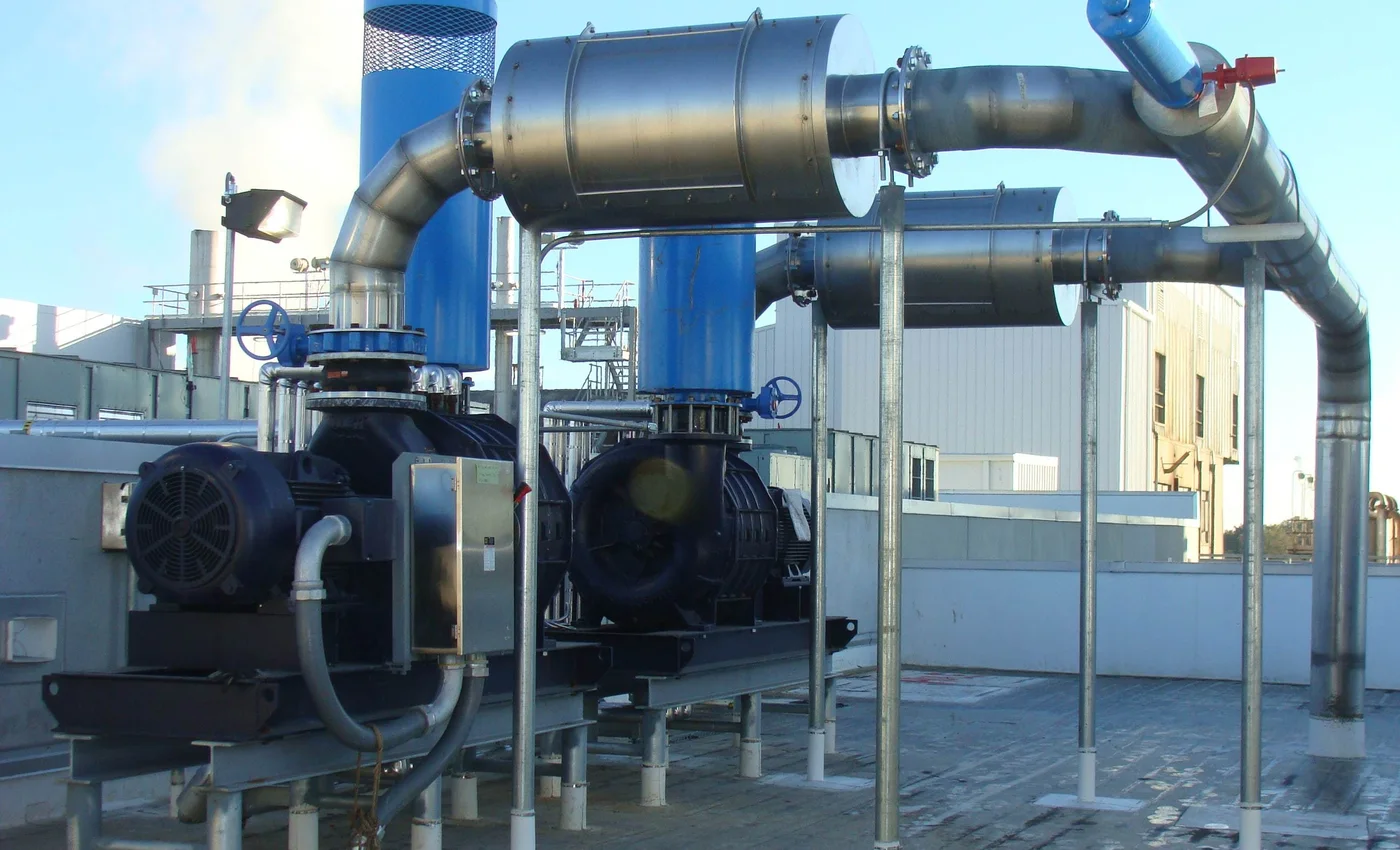
What TVD Reviews During a Site Assessment
Food processing vacuum design is field work. TVD looks at what operators pick up, where the material accumulates, how often cleanup happens, and what the sanitation team must prove during audits. The assessment also separates dry cleanup from wet cleanup so the system is not asked to do incompatible jobs without the right separator, receiver, or accessory strategy.
That field review is also where TVD decides whether the best answer is a DuroVac central system, a PowerLift, a DVR/DVP configuration, or a specialty configuration around classified-area and discharge requirements. The point is not to sell the largest unit. It is to give the plant enough suction, enough access, and enough collection capacity for the cleanup routine to actually happen.
ROI Without Weak Compliance Claims
Recurring vac truck service, shutdown cleaning, and operator cleanup time can become expensive fast, but food processors should be careful with generic payback claims. ROI depends on cleaning frequency, contractor minimums, downtime, labor, discharge method, system scope, and whether the plant is replacing a temporary cleanup routine with permanent infrastructure.
The stronger case is operational: permanent vacuum access lets crews clean when material hits the floor, not when a contractor arrives. In plants with repeatable dust or ingredient accumulation, that can reduce scheduling friction, improve housekeeping consistency, and make sanitation records easier to support. For plants already paying for recurring vacuum truck service, TVD can model system cost against actual invoices and expected production impact.
Published DuroVac bakery and sugar applications are useful reference points because they show central vacuum systems being selected for real food-dust problems. TVD uses that same site-specific approach when building ROI models: actual invoices, cleaning frequency, labor impact, and production constraints come before any payback claim.
Frequently Asked Questions
Are flour, sugar, and spice dust really combustible dust hazards?
They can be. Combustibility depends on the material, particle size, moisture, dispersion, ignition sources, and the site conditions. Food processors should treat dry organic powders as a hazard-review item and align equipment selection with the dust hazard analysis.
Can a vacuum system help with allergen control?
Yes, when it is designed with zone discipline, dedicated pickup tools, cleanable hose assemblies, and procedures that support changeover verification. A vacuum system does not replace sanitation validation, but it can reduce dry residue movement compared with sweeping or compressed air.
Should a food plant choose portable or central vacuum?
Portable or semi-portable systems can fit focused cleanup zones and smaller production areas. Central systems make more sense when the plant needs many pickup locations, simultaneous users, fixed cleaning routes, and consistent coverage across production and packaging.
Does TVD only specify DuroVac for food processing?
No. TVD starts with the application and the hazard review. DuroVac is often the first platform to evaluate for food, spice, flour, grain, and pet food cleanup, but the final recommendation depends on material, classification, sanitation requirements, and integration needs.
Need a Food-Plant Vacuum System Built Around Compliance?
TVD Industries can walk the floor, review current cleanup practices, and recommend a food-processing vacuum layout that fits your material, sanitation program, and dust-control obligations.
Book an intro call with Aaron