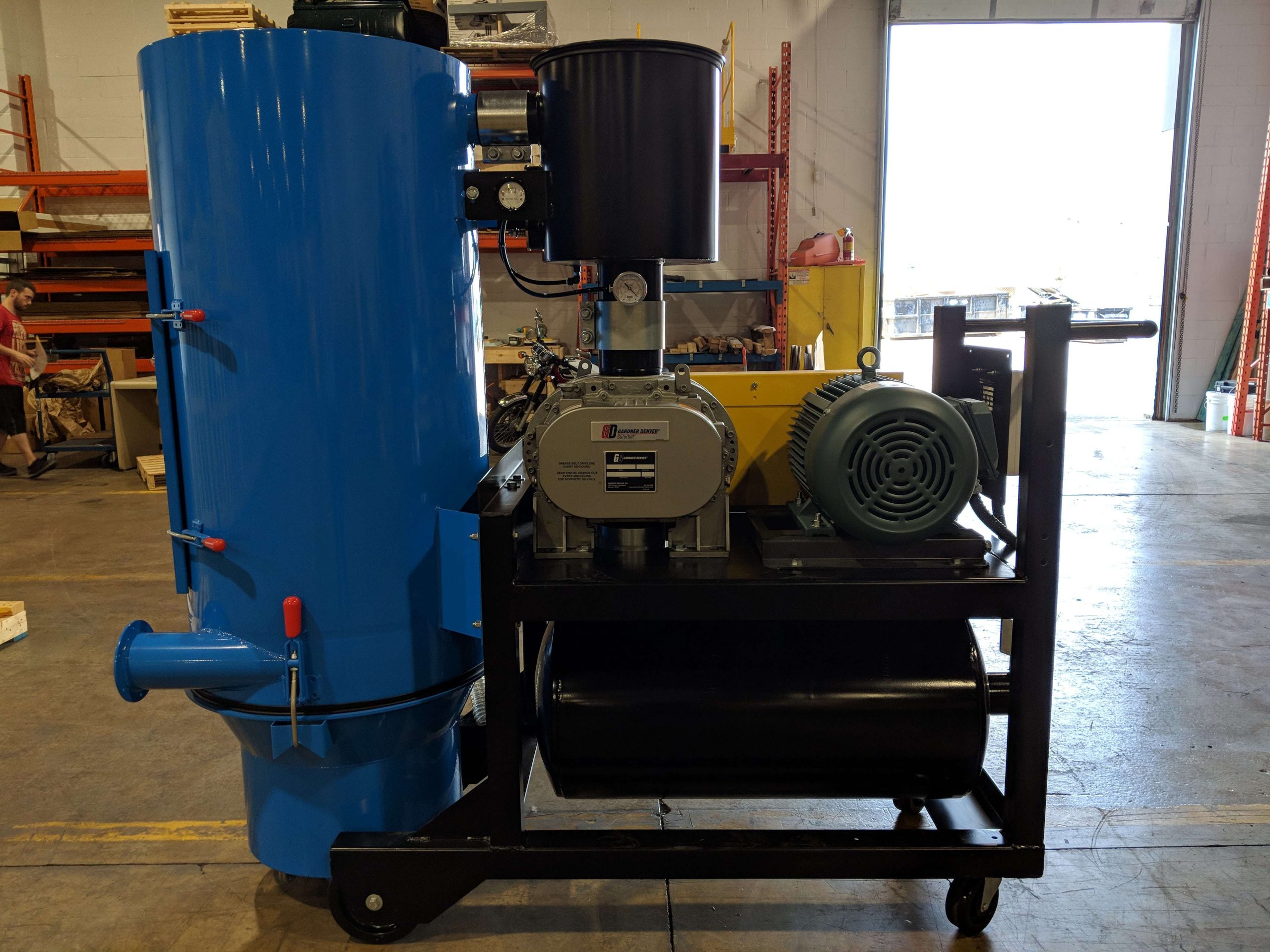

The right vacuum producer is chosen from the material, pipe run, pickup rate, duty cycle, and operator count, not from a generic horsepower chart.
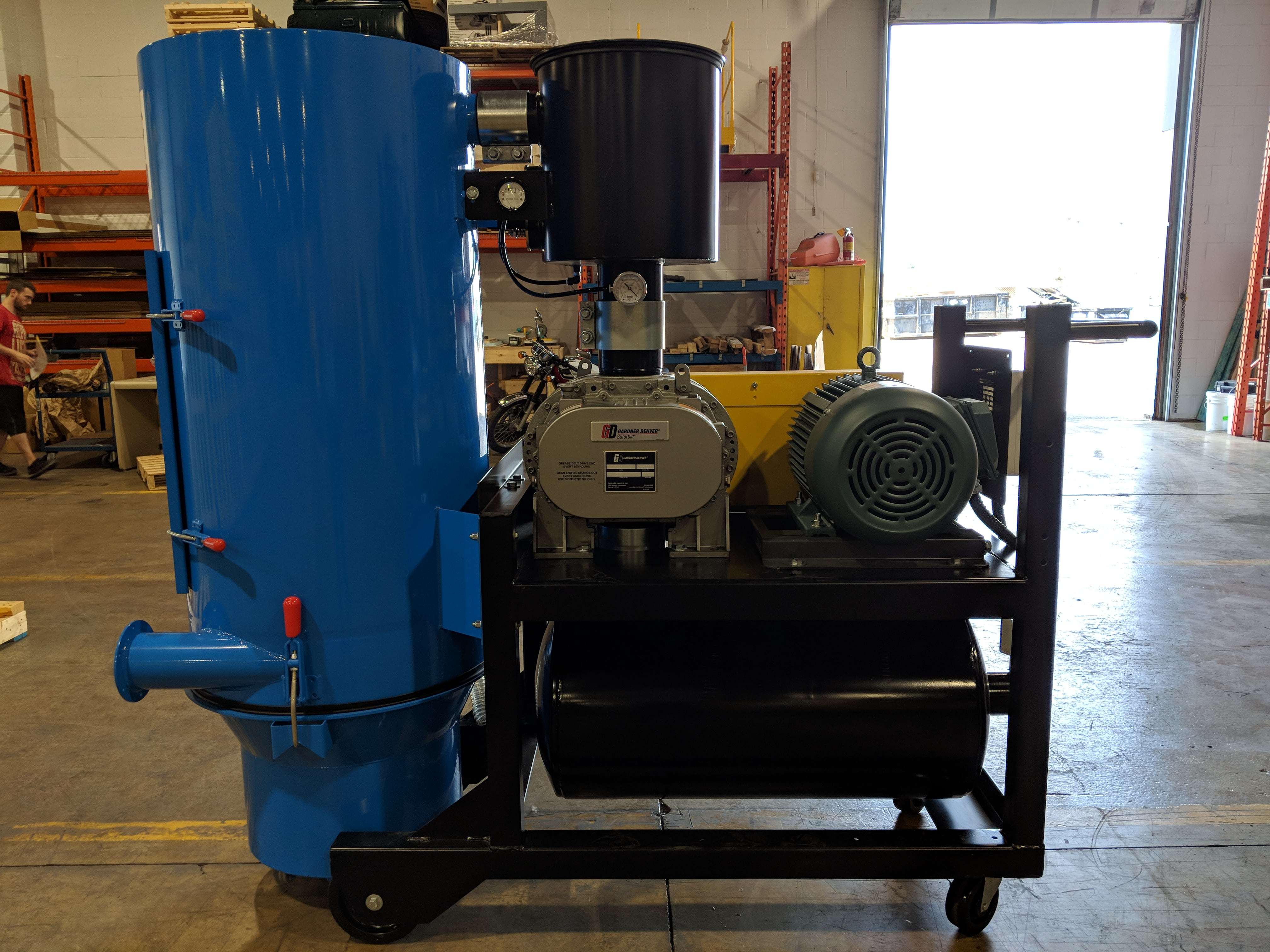
An industrial vacuum system fails quietly when the producer is wrong. The motor still starts, the hose still has suction near the unit, and the proposal still looks complete, but the farthest inlet does not clean, operators avoid the system, filters load too quickly, or the plant keeps calling a vacuum truck because the installed system cannot move the material.
TVD Industries treats the regenerative blower vs positive displacement question as an engineering decision. A regenerative blower, centrifugal multi-stage pump, and positive displacement pump can all be legitimate in the right setting. The difference is where the system needs air volume, where it needs vacuum depth, and how much resistance the plant creates through pipe length, hose diameter, separators, filters, tools, and material weight.
The Producer Choice Happens Before the Brand Choice
Brand matters, but it is not the first decision. The first decision is the pressure and airflow curve the plant needs at the tool. A plant pulling light dust from several workstations may need a different producer than a plant lifting dense abrasive material from pits, conveyors, rail unload areas, bag dump stations, or mezzanines.
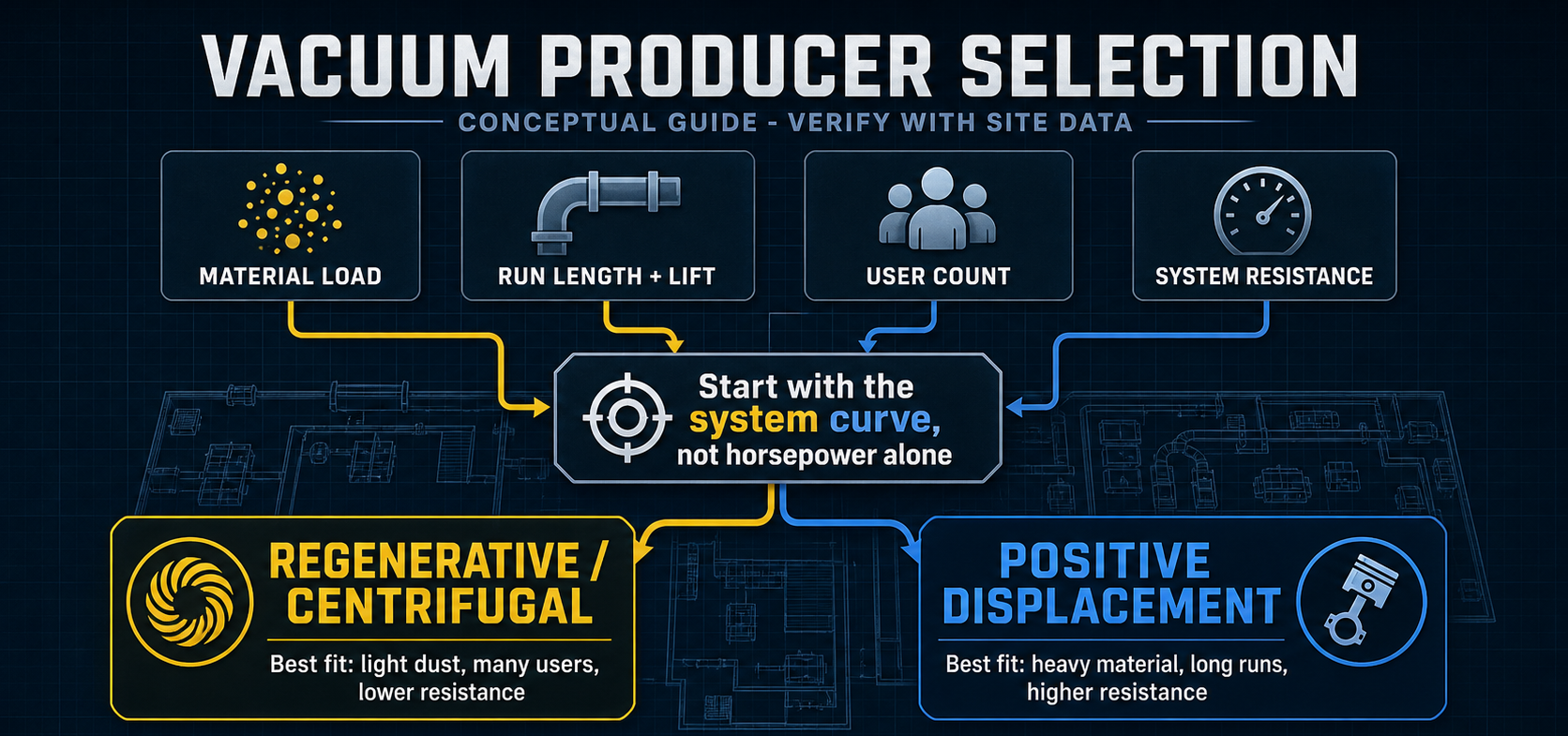
Practical point: If the farthest inlet, heaviest material, or worst cleanup zone is not considered during design, the system will be sized for the easy part of the plant. That is where many disappointing central vacuum projects start.
What Regenerative and Centrifugal Producers Do Well
Regenerative blowers and centrifugal vacuum producers are attractive when the application favors airflow, continuous operation, clean air movement, and lower maintenance. Chart’s Spencer Turbine line lists regenerative blowers, single and multistage centrifugal blowers, central vacuum systems, separators, controls, tubing, fittings, hoses, and tools as part of its air and gas handling range.
That family of equipment can be a strong fit for source-capture tools, sanding or grinding dust, distributed light housekeeping, and systems where many operators need steady pickup without asking the producer to overcome extreme resistance. The limitation is not quality. The limitation is physics. As resistance rises, the producer curve must still deliver enough performance at the tool.
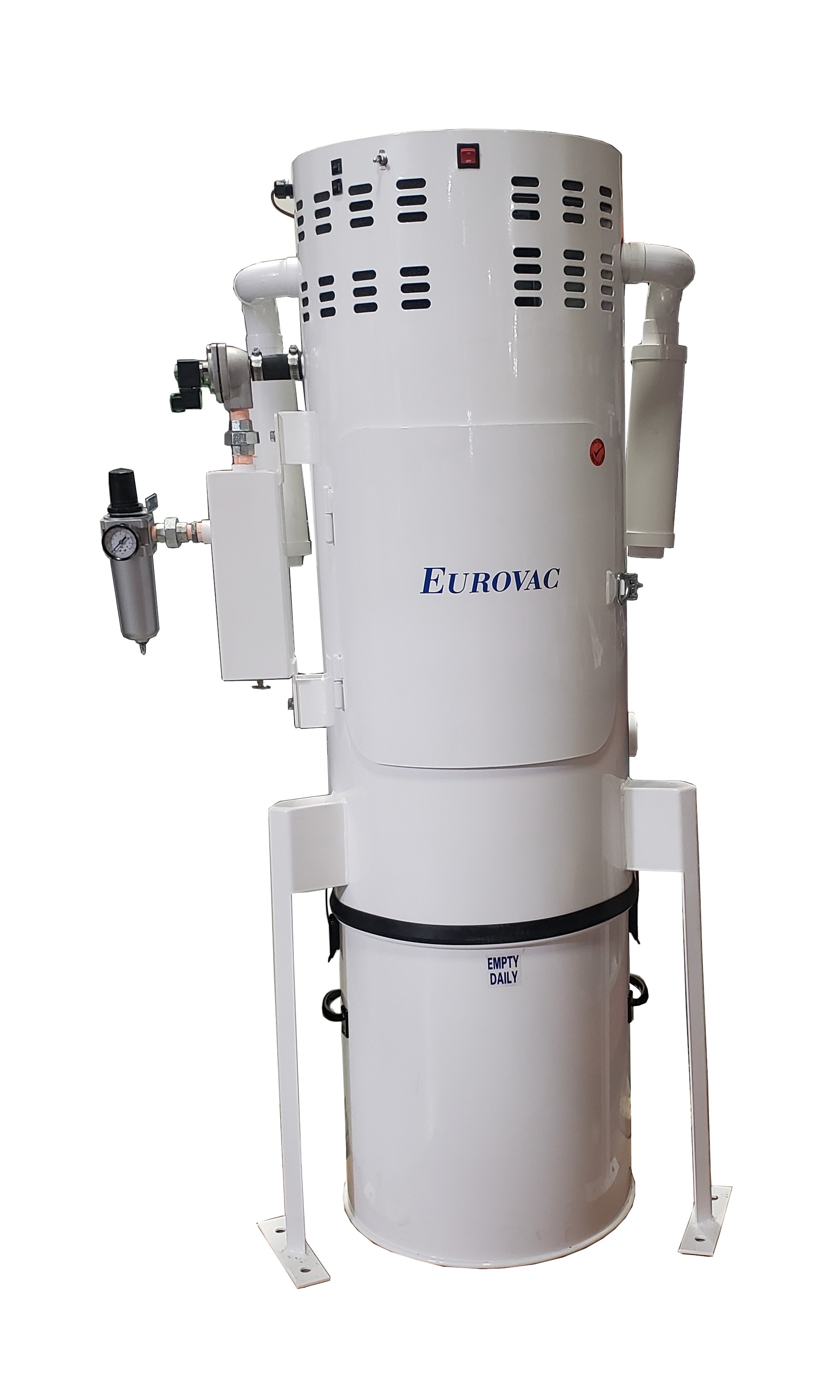
Eurovac EIII Centrifugal Central Systems
Eurovac’s EIII industrial central system is published as a centrifugal multi-stage turbine blower platform for multi-user housekeeping, grinding, and orbital sander applications. It is the kind of producer TVD evaluates when the application needs high airflow across many planned access points.
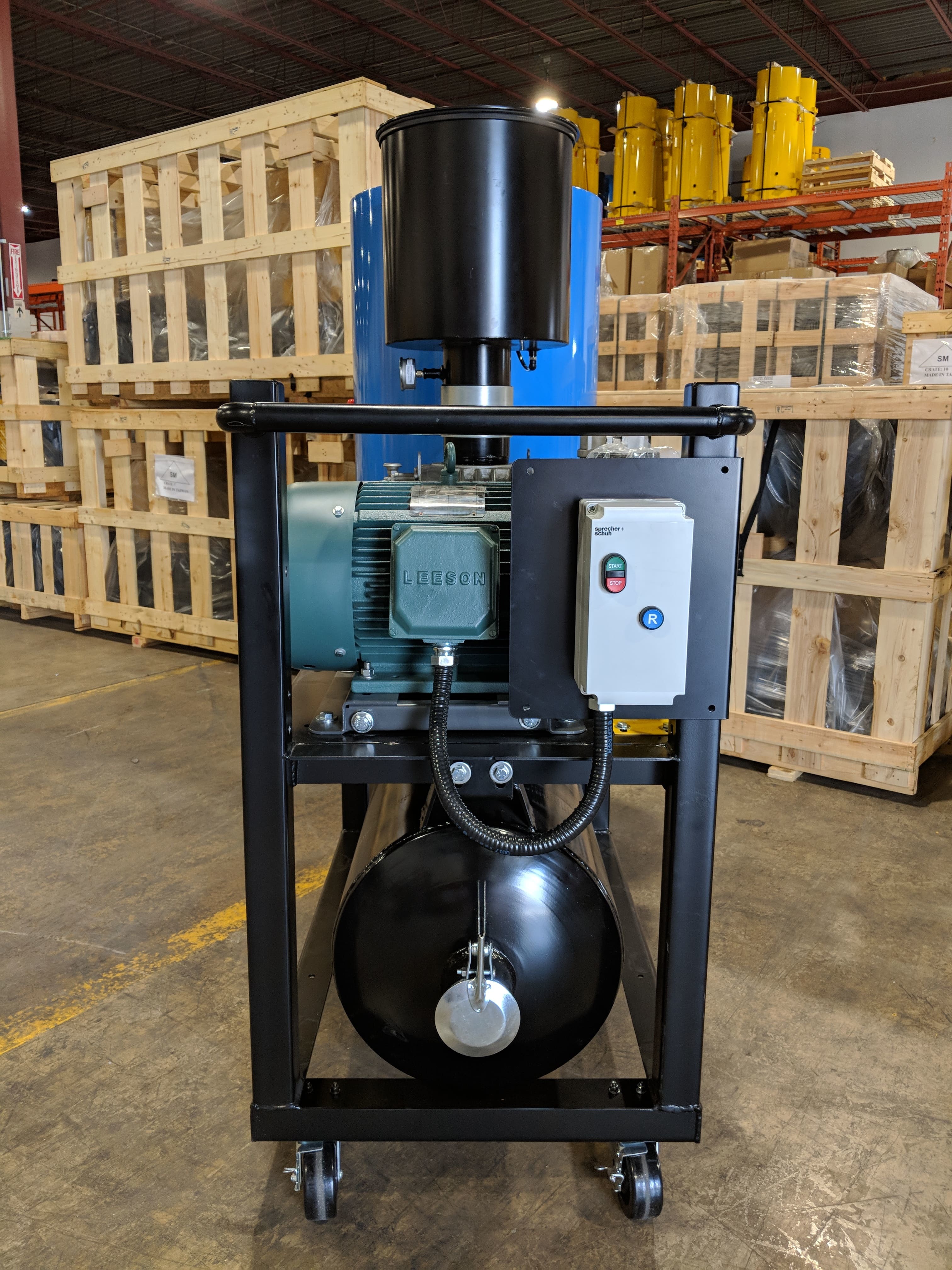
DuroVac DVR and DVP Paths
DuroVac’s product gallery identifies DVR equipment with a regenerative vacuum pump for moderately heavy powder and DVP equipment with a positive displacement pump for heavy powders and granules. That split is useful because it shows that the producer decision changes inside the same supplier family.
The takeaway is not that regenerative or centrifugal producers are light-duty toys. It is that they belong in the right envelope: controlled material, controlled distance, manageable pressure drop, and realistic simultaneous user assumptions.
Where Positive Displacement Pumps Win
Positive displacement pumps are favored when the system has to hold vacuum against resistance. That can mean longer pipe runs, heavier particulate, larger hose, dense powders, wet or sticky material, high lift, separator losses, or cleanup points far from the producer. In those conditions, a high-airflow producer that looks good near the machine can fall short at the actual pickup point.
DuroVac describes the PowerLift diesel and propane models as using positive displacement vacuum pumps for high-vacuum industrial work, including configurations available for portable and central vacuum systems. Eurovac also publishes an EIV positive displacement central system for applications with very long runs or heavier particulate.
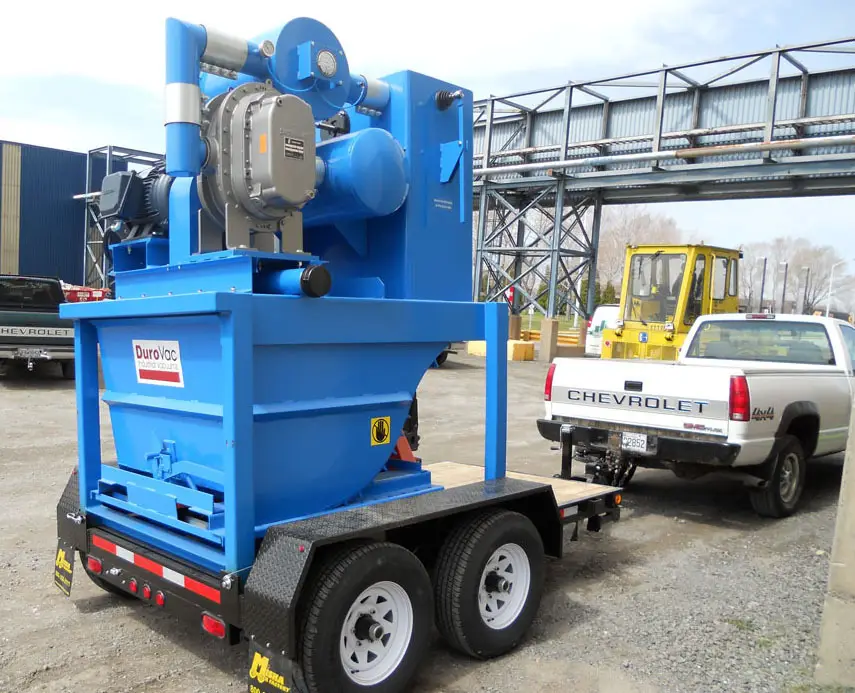
DuroVac PowerLift for Heavy Recovery
PowerLift belongs in the conversation when a plant is replacing outside cleanup, lifting heavier material, using bigger hose, cleaning conveyors or pits, or building a semi-portable or central layout around demanding pickup zones.
The tradeoff is cost, service discipline, noise planning, and mechanical complexity. A positive displacement pump is not automatically better. It is better when the actual plant demands its vacuum depth and load tolerance.
Regenerative Blower vs Positive Displacement at a Glance
| Decision Point | Regenerative / Centrifugal Producer | Positive Displacement Pump |
|---|---|---|
| Best design target | Air volume, steady lighter-duty pickup, source capture, and many planned access points. | Vacuum depth, material recovery, long runs, high lift, and heavy or dense particulate. |
| Material behavior | Light dust, fines, sanding dust, dry powder in controlled quantities, and lower-resistance pickup. | Heavy powders, granules, metal fines, wet or dense debris, conveyor buildup, and larger material loads. |
| System resistance | Works best when pipe, hose, separators, filters, and tools do not create excessive pressure drop. | Better suited when the system must keep performance through long pipe, bigger tools, and separator losses. |
| Operating profile | Can fit continuous multi-user cleanup or source-capture work when each point is correctly sized. | Can fit central, semi-portable, or portable heavy-duty cleanup where crews need stronger pickup under load. |
| Common mistake | Using a high-airflow producer for a job that actually needs deeper vacuum at the farthest inlet. | Overspending on deep vacuum where the plant only needs controlled airflow for light capture and housekeeping. |
How TVD Sizes the Producer
TVD starts with the bad day, not the showroom day. The design has to work when the farthest inlet is in use, the filters have realistic dust loading, operators are using the expected hose length, and the material is moving at the pickup rate the plant actually needs.
This is why two facilities with the same square footage can need different producer types. The vacuum producer is only one part of the system, but it has to be selected after the real pressure-drop and material-handling picture is understood.
How Permanent Vacuum Systems Pay Back
Replacing recurring vacuum truck service with permanent equipment can reduce contractor spend, shorten cleanup windows, and give operators vacuum access when the material is on the floor instead of days later. TVD evaluates that business case against current invoices, cleanup frequency, shutdown time, plant labor, disposal handling, maintenance, and the facility’s daily operating routine.
Steel Manufacturer Case Study
In DuroVac’s steel manufacturer case study, iron dust around conveyor areas created safety and housekeeping concerns, and DuroVac specified a PowerLift 40 connected to piping as a central vacuum. The case study reports that the customer later installed seven PowerLift systems across multiple plants and achieved return on investment within months.
The same discipline applies when TVD evaluates regenerative, centrifugal, or positive displacement systems. Lower initial cost only helps when the installed system can clean the required zones, reach the expected operators, and support the housekeeping routine shift after shift.
What TVD Delivers After the Assessment
A useful recommendation gives the facility more than “use a bigger vacuum.” TVD identifies the producer family, expected user count, pipe and hose assumptions, collection method, filtration approach, discharge path, maintenance burden, and the practical limits of the design.
Selection rule: A regenerative blower vs positive displacement decision is not a brand argument. It is a performance match. TVD picks the producer that will still clean at the farthest, dirtiest, most important point in the facility.
Frequently Asked Questions
Can a regenerative blower replace a positive displacement pump?
Sometimes, but only when the material, pipe run, hose length, filter loading, and pickup rate stay inside the regenerative blower’s practical performance envelope. Heavy material, long runs, or high-lift cleanup often push the design toward positive displacement.
Is positive displacement always the better industrial vacuum choice?
No. Positive displacement is powerful, but it can add cost, service needs, noise planning, and mechanical complexity. If the job is lighter source capture or controlled multi-user housekeeping, a regenerative or centrifugal producer may be the better fit.
Where does Eurovac fit in this comparison?
Eurovac publishes centrifugal central systems and positive displacement central systems. TVD evaluates Eurovac when the facility needs multi-user central access, source-capture or housekeeping layouts, or a specific producer path that matches the system curve.
Does combustible dust change the producer decision?
It can. Combustible dust adds questions about material data, classified areas, grounding and bonding, filtration, separators, discharge, housekeeping records, and authority requirements. The producer still has to meet the airflow and vacuum requirement, but the hazard review shapes the complete equipment specification.
Need the Right Vacuum Producer for the Actual Floor?
TVD Industries can walk the plant, review the cleanup route, compare regenerative, centrifugal, and positive displacement options, and recommend a vacuum system that fits the material, distance, and operators.
Book an intro call with Aaron